AOP是什么 AOP(Aspect Oriented Programming),可以说是OOP(Object Oriented Programming,面向对象编程)的补充和完善。
它利用一种称为”横切”的技术,剖解开封装的对象内部,并将那些影响了多个类的公共行为封装到一个可重用模块,并将其命名为”Aspect”,即切面。所谓”切面”,简单说就是那些与业务无关,却为业务模块所共同调用的逻辑或责任封装起来,便于减少系统的重复代码,降低模块之间的耦合度,并有利于未来的可操作性和可维护性。
使用”横切”技术,AOP把软件系统分为两个部分:核心关注点 和横切关注点 。业务处理的主要流程是核心关注点,与之关系不大的部分是横切关注点。横切关注点的一个特点是,他们经常发生在核心关注点的多处,而各处基本相似,比如权限认证、日志、事物。AOP的作用在于分离系统中的各种关注点,将核心关注点和横切关注点分离开来 。
AOP核心概念 横切关注点(对哪些方法进行切入) 对哪些方法进行拦截,拦截后怎么处理,这些关注点称之为横切关注点
切面 (aspect,把原来糅杂在业务逻辑代码中的非业务代码抽取出来,把功能相同的放在一个类中形成一个切面)
类是对物体特征的抽象,切面就是对横切关注点的抽象
连接点(joinpoint)(需要切入的点) 被拦截到的点,因为Spring只支持方法类型的连接点,所以在Spring中连接点指的就是被拦截到的方法,实际上连接点还可以是字段或者构造器
切入点(pointcut) 对连接点进行拦截的定义
通知(advice) 所谓通知指的就是指拦截到连接点之后要执行的代码,通知分为前置、后置、异常、最终、环绕通知五类
目标对象 代理的目标对象
织入(weave) 将切面应用到目标对象并导致代理对象创建的过程
引入(introduction) 在不修改代码的前提下,引入可以在运行期为类动态地添加一些方法或字段
基本案例 1 2 3 4 5 6 7 8 9 10 11 12 13 @Slf4j @Component public class Calculator public int div (int x,int y) "Mycaculator...div" );return x / y;public int add (int x,int y) "Mycaculator...add" );return x + y;
1 2 3 4 5 6 7 8 9 10 11 12 13 14 15 16 17 18 19 20 21 22 23 24 25 26 27 @Aspect @Slf4j @Component public class CalculateAspect @Pointcut("execution(public int com.study.aop.Calculator.*(..))") private void pointcut () @Before("pointcut()") public void before () "前置通知。。。" );@After("pointcut()") public void after () "后置通知。。。" );@AfterReturning("pointcut()") public void afterReturn () "返回通知。。。" );@AfterThrowing("pointcut()") public void afterThrowing () "异常通知。。。" );
1 2 3 4 5 6 7 8 9 10 11 12 13 14 15 16 17 18 19 20 21 22 23 24 25 26 27 28 29 30 31 @Configuration @EnableAspectJAutoProxy @ComponentScan(basePackages = {"com.study.aop"}) public class AopConfig @Slf4j public class AopMain public static void main (String[] args) new AnnotationConfigApplicationContext(AopConfig.class);int add = calculator.add(1 , 2 );"" );int div = calculator.div(10 , 0 );"" );2022 -09-0822:23 :55 INFO CalculateAspect:17 - 前置通知。。。2022 -09-0822:23 :55 INFO Calculator:35 - Mycaculator...add2022 -09-0822:23 :55 INFO Calculator:39 - add result:3 2022 -09-0822:23 :55 INFO CalculateAspect:22 - 后置通知。。。2022 -09-0822:23 :55 INFO CalculateAspect:27 - 返回通知。。。2022 -09-0822:23 :55 INFO AopMain:13 - 3 2022 -09-0822:23 :55 INFO CalculateAspect:17 - 前置通知。。。2022 -09-0822:23 :55 INFO Calculator:28 - Mycaculator...div2022 -09-0822:23 :55 INFO CalculateAspect:22 - 后置通知。。。2022 -09-0822:23 :55 INFO CalculateAspect:32 - 异常通知。。。"main" java.lang.ArithmeticException: / by zero
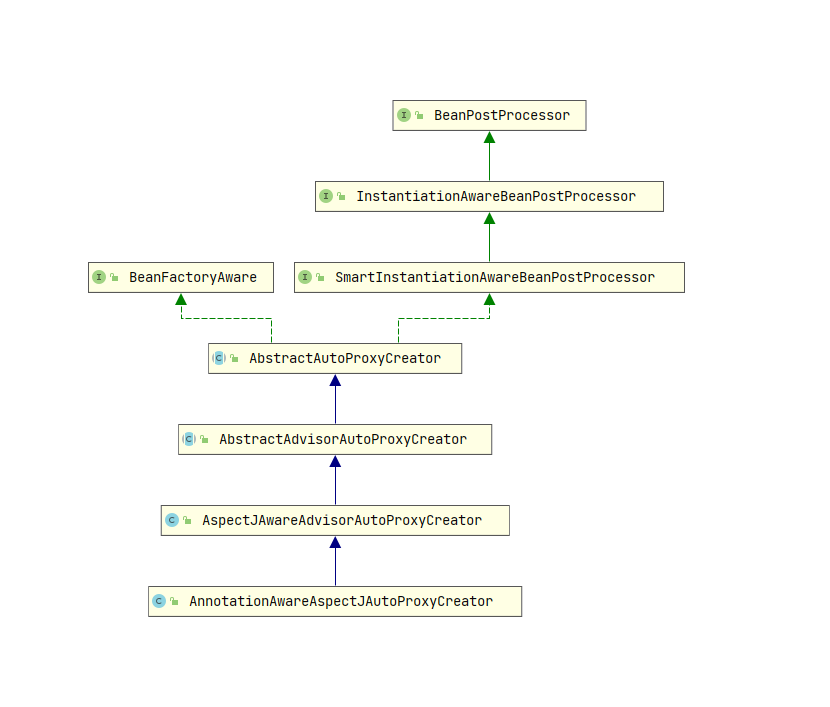
从@EnableAspectJAutoProxy说起 不难看出该注解为我们注入了AnnotationAwareAspectJAutoProxyCreator这个类,分析这个类的继承结构
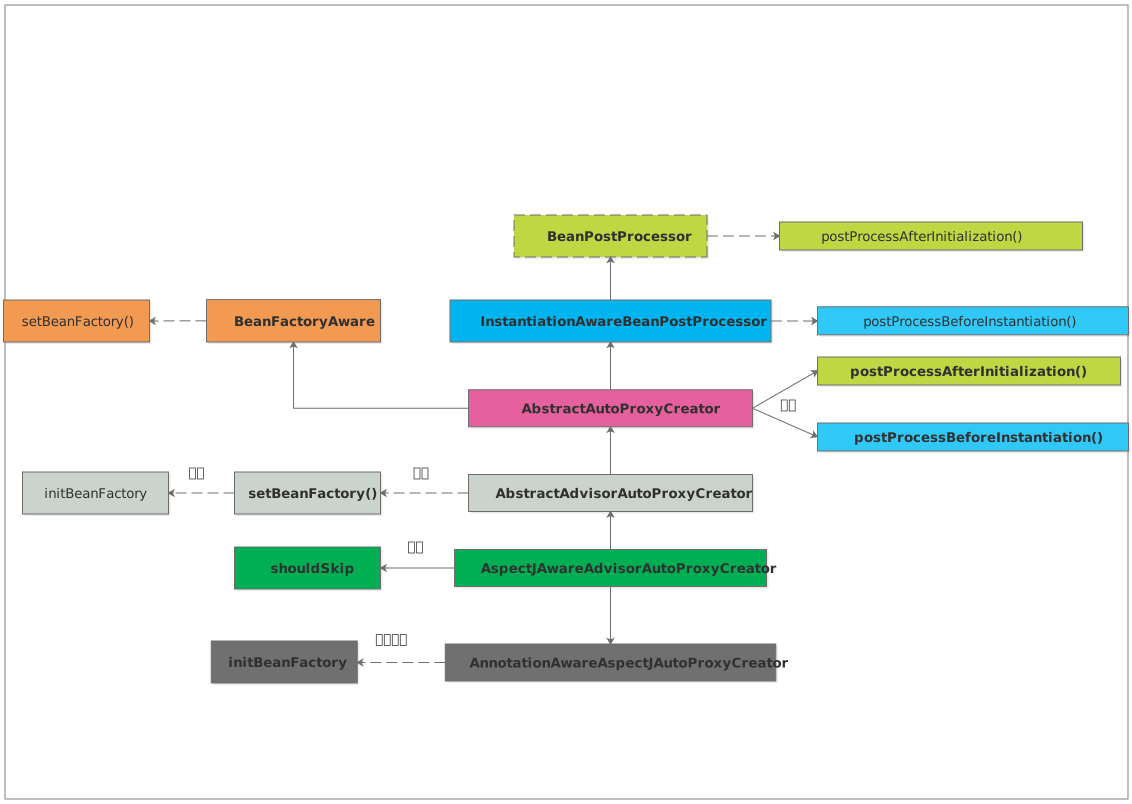
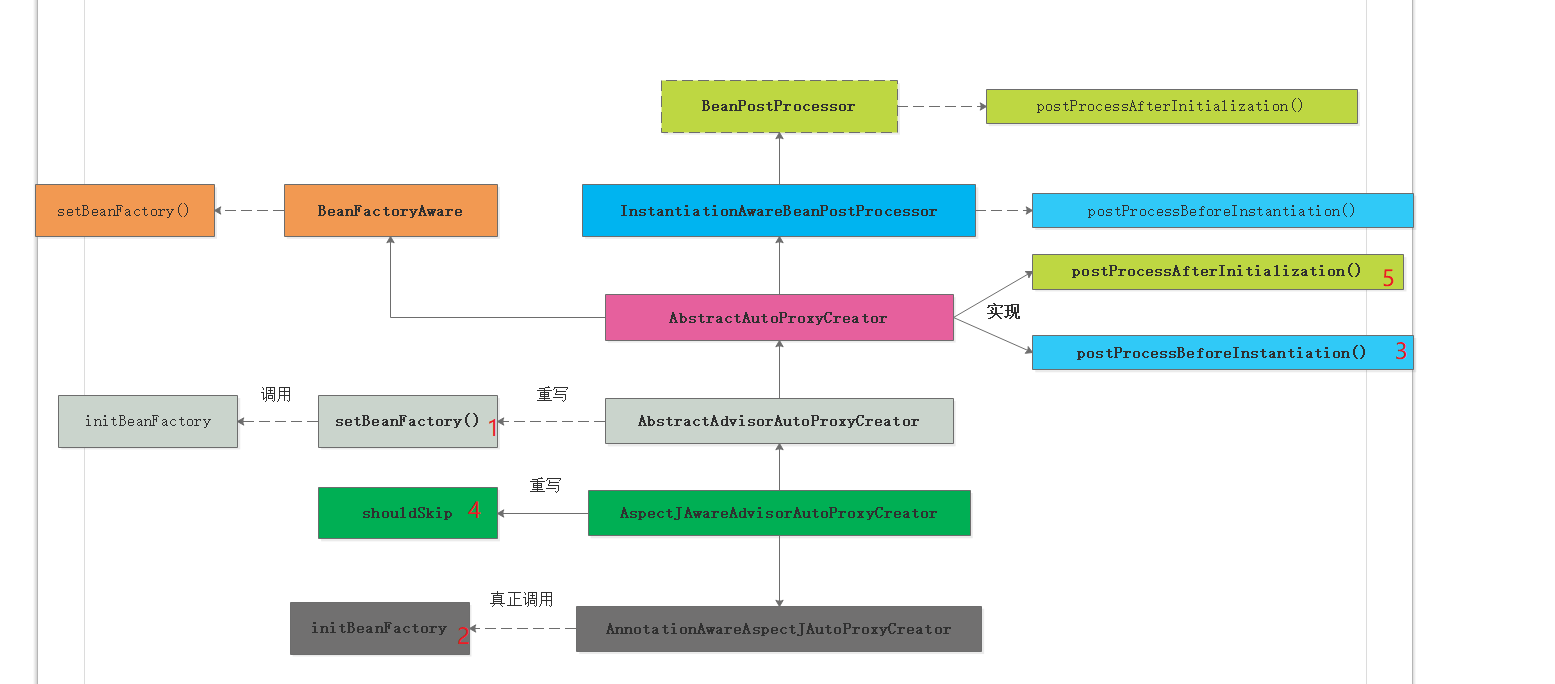
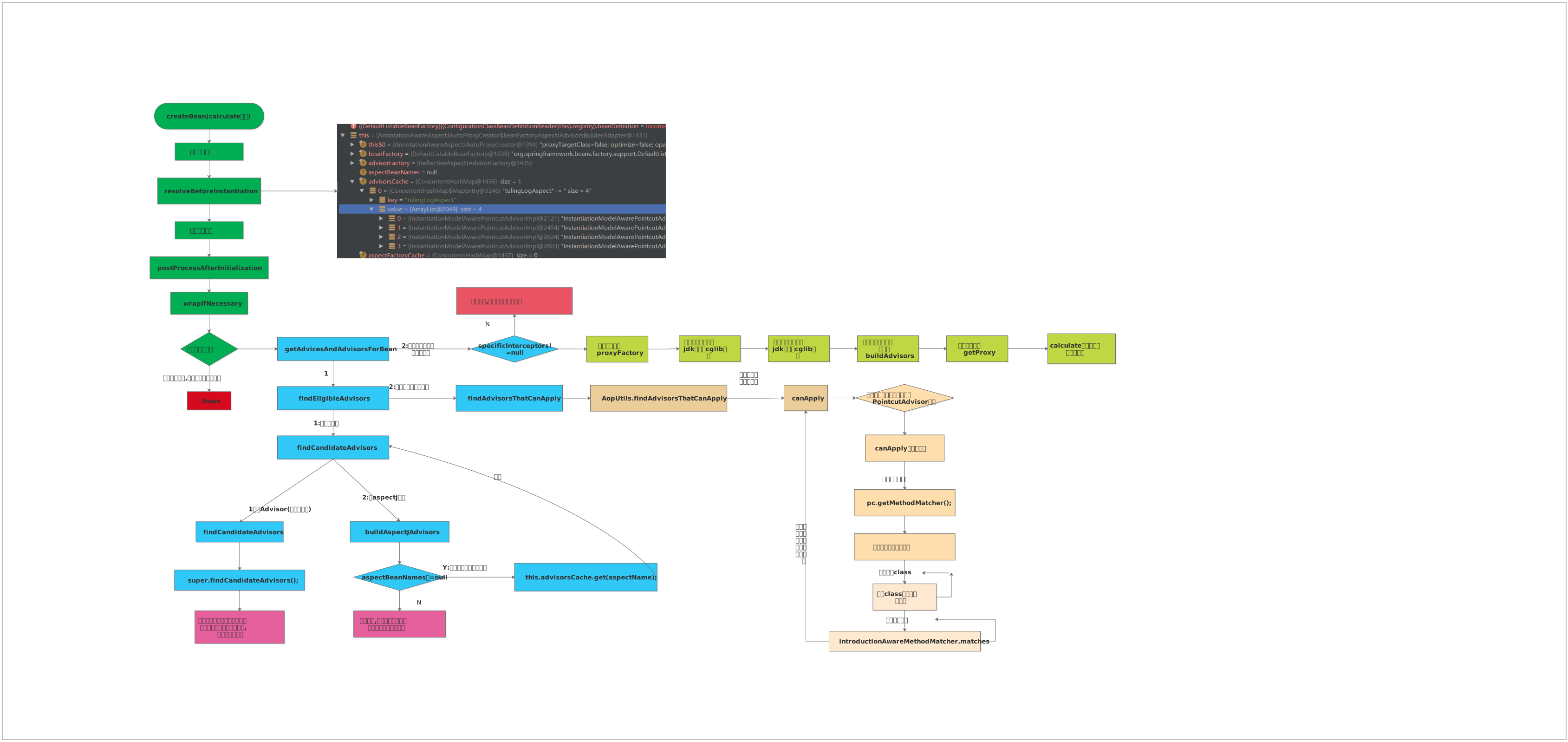
不难发现这个类觉有BeanFactoryAware、BeanPostProcessor、InstantiationAwareBeanPostProcessor的特性,因此可以得出下图
1 2 3 4 5 6 7 8 9 10 11 12 13 14 15 16 17 18 19 20 21 22 23 24 25 26 27 28 29 30 31 32 33 34 35 36 37 38 39 40 41 42 43 44 45 46 47 48 49 50 51 52 53 54 55 56 57 58 59 60 61 62 63 64 65 66 67 68 69 70 @Override public void setBeanFactory (BeanFactory beanFactory) super .setBeanFactory(beanFactory);if (!(beanFactory instanceof ConfigurableListableBeanFactory)) {throw new IllegalArgumentException("AdvisorAutoProxyCreator requires a ConfigurableListableBeanFactory: " + beanFactory);protected void initBeanFactory (ConfigurableListableBeanFactory beanFactory) this .advisorRetrievalHelper = new BeanFactoryAdvisorRetrievalHelperAdapter(beanFactory);@Override public Object postProcessBeforeInstantiation (Class<?> beanClass, String beanName) throws BeansException if (!StringUtils.hasLength(beanName) || !this .targetSourcedBeans.contains(beanName)) {if (this .advisedBeans.containsKey(cacheKey)) {return null ;if (isInfrastructureClass(beanClass) || shouldSkip(beanClass, beanName)) {this .advisedBeans.put(cacheKey, Boolean.FALSE);return null ;if (targetSource != null ) {if (StringUtils.hasLength(beanName)) {this .targetSourcedBeans.add(beanName);this .proxyTypes.put(cacheKey, proxy.getClass());return proxy;return null ;@Override protected boolean shouldSkip (Class<?> beanClass, String beanName) for (Advisor advisor : candidateAdvisors) {if (advisor instanceof AspectJPointcutAdvisor &&return true ;return super .shouldSkip(beanClass, beanName);@Override public Object postProcessAfterInitialization (@Nullable Object bean, String beanName) throws BeansException if (bean != null ) {if (!this .earlyProxyReferences.contains(cacheKey)) {return wrapIfNecessary(bean, beanName, cacheKey);return bean;
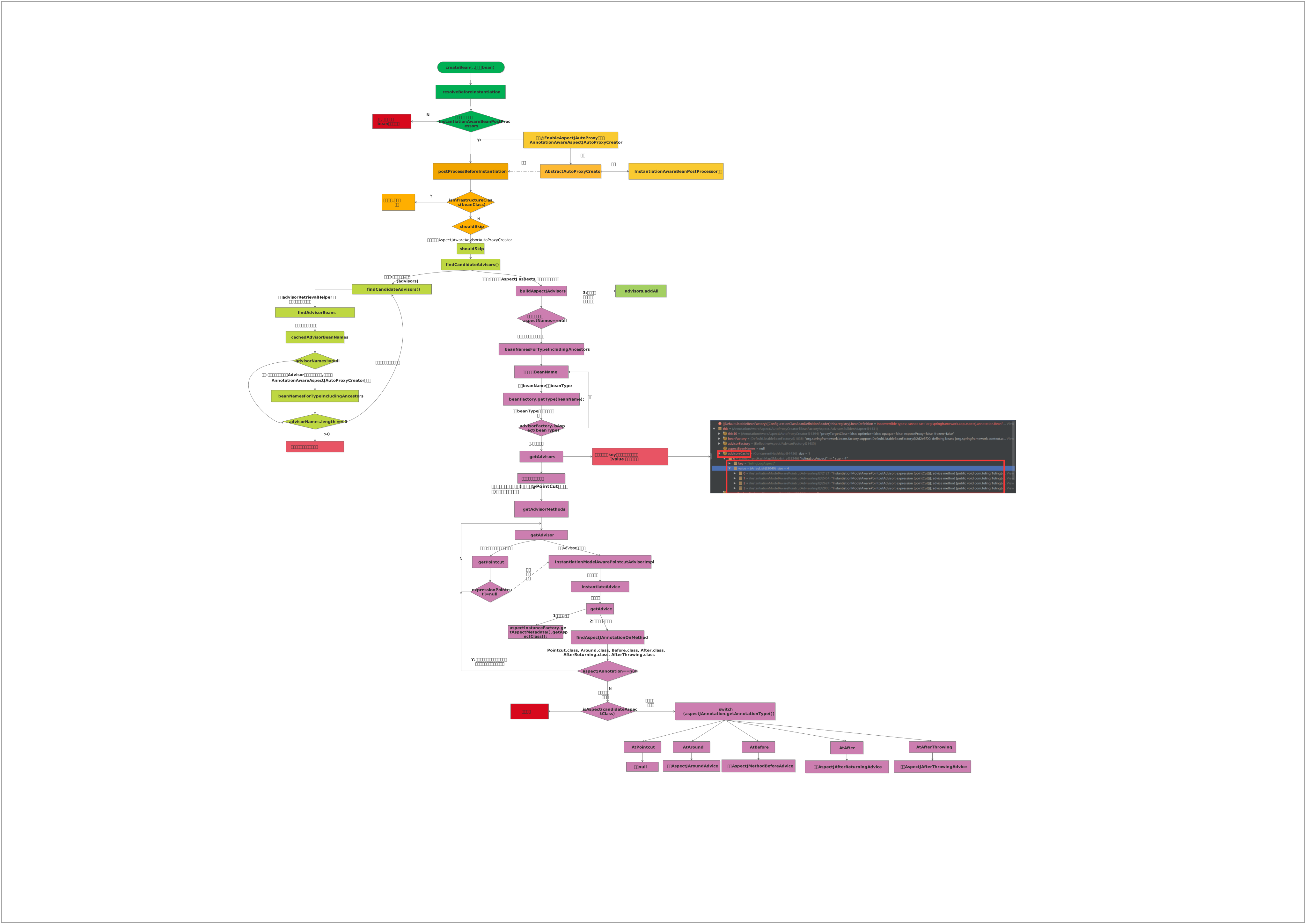
InstantiationAwareBeanPostProcessor的作用 简述:postProcessBeforeInstantiation()加载事务和AOP的切面并放到缓存中 ,加载事务Advisors和AOP的切面转化为Advisors并放到缓存中
BeanPostProcessor的作用 简述:postProcessAfterInitialization() 判断可以之前缓存的切面是否可以应用到类中,代理目标类
注解参数 1 @EnableAspectJAutoProxy(exposeProxy = true,proxyTargetClass = true)
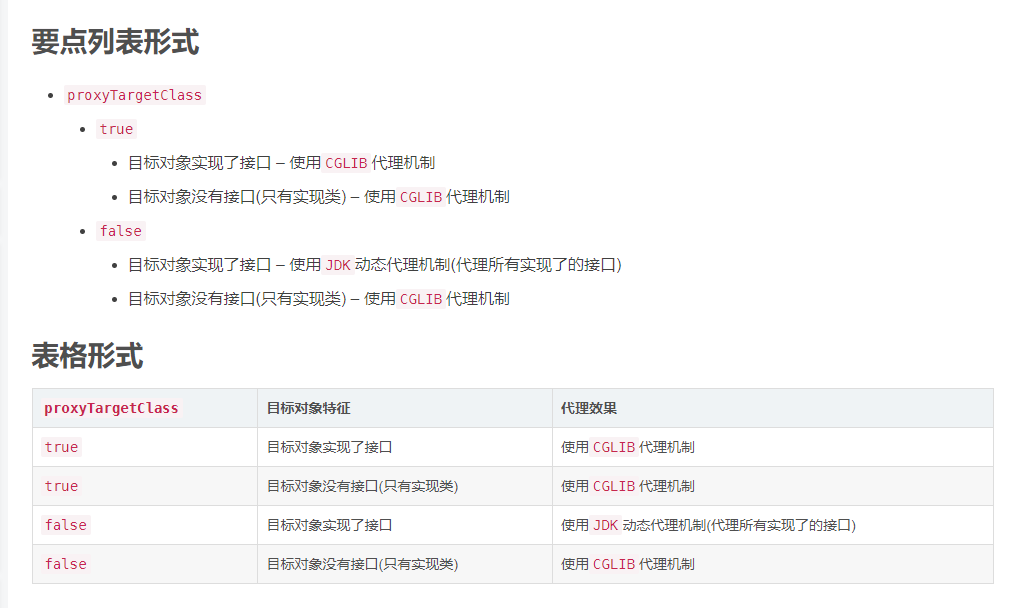
proxyTargetClass
1 2 3 4 5 6 7 8 9 10 11 12 13 14 15 16 17 18 19 20 21 22 23 24 25 26 27 28 29 30 31 32 33 34 35 36 37 38 39 40 41 42 43 44 45 46 47 48 49 50 51 52 53 54 55 56 57 58 59 60 61 62 63 64 65 66 67 68 69 70 71 72 73 74 75 76 77 78 79 80 81 82 83 84 85 86 87 88 protected Object createProxy ( Class<?> beanClass, String beanName, Object[] specificInterceptors, TargetSource targetSource) if (this .beanFactory instanceof ConfigurableListableBeanFactory) {this .beanFactory, beanName, beanClass);new ProxyFactory();this );if (!proxyFactory.isProxyTargetClass()) {if (shouldProxyTargetClass(beanClass, beanName)) {true );else {this .freezeProxy);if (advisorsPreFiltered()) {true );return proxyFactory.getProxy(getProxyClassLoader());public Object getProxy (ClassLoader classLoader) return createAopProxy().getProxy(classLoader);public AopProxy createAopProxy (AdvisedSupport config) throws AopConfigException if (config.isOptimize() || config.isProxyTargetClass() || hasNoUserSuppliedProxyInterfaces(config)) {if (targetClass == null ) {throw new AopConfigException("TargetSource cannot determine target class: " +"Either an interface or a target is required for proxy creation." );if (targetClass.isInterface() || Proxy.isProxyClass(targetClass)) {return new JdkDynamicAopProxy(config);return new ObjenesisCglibAopProxy(config);else {return new JdkDynamicAopProxy(config);public Object getProxy (ClassLoader classLoader) if (logger.isDebugEnabled()) {"Creating JDK dynamic proxy: target source is " + this .advised.getTargetSource());this .advised, true );return Proxy.newProxyInstance(classLoader, proxiedInterfaces, this );
exposeProxy 1 2 3 4 5 6 7 8 9 10 11 12 13 14 15 16 17 18 19 @Slf4j @Component public class Calculator public int div (int x,int y) "Mycaculator...div" );"div result:{}" ,x / y);return x / y;public int add (int x,int y) "Mycaculator...add" );"add result:{}" ,x+y);return x + y;
@EnableAspectJAutoProxy(exposeProxy = true) 这个东东是用来干什么的?没有配置exposeProxy 暴露代理对象的时候我们方法调用,我们在add方法中 通过this来调用本类的方法div()方法的时候,发现div()的方法不会被拦截,而我们配置了后exposeProxy的属性,我们发现可以通过
int retVal = ((Calculate) AopContext.currentProxy()).div(numA,numB);
调用的时候,发现了div()方法可以被拦截
1 2 3 4 5 6 7 8 9 10 11 final class JdkDynamicAopProxy implements AopProxy , InvocationHandler , Serializable @Override @Nullable public Object invoke (Object proxy, Method method, Object[] args) throws Throwable if (this .advised.exposeProxy) {true ;
原理:把这个exposeProxy设置为true,会把代理对象存放在线程变量中,
AopContext.currentProxy())是从线程变量中获取代理对象(源码中分析)
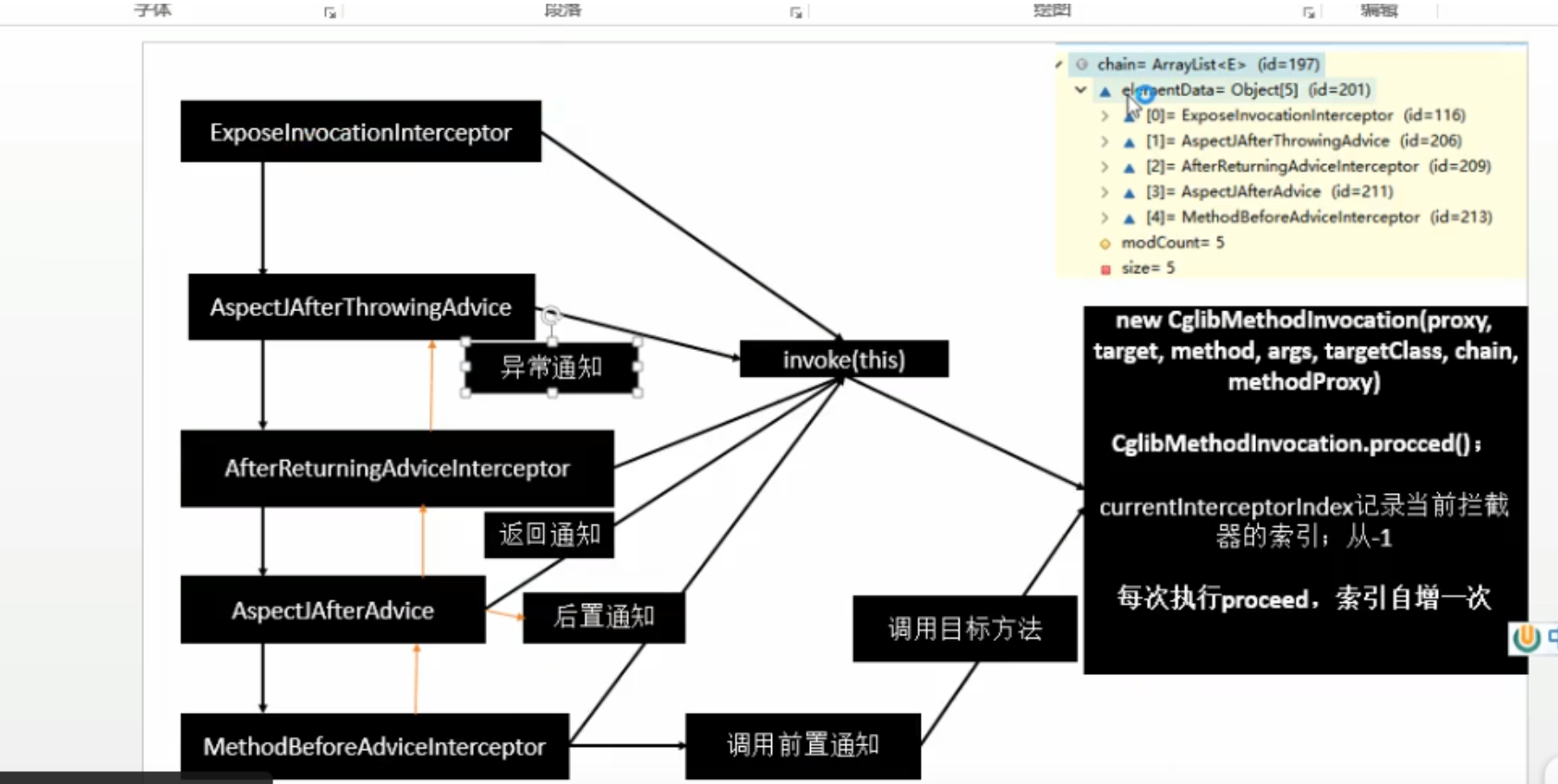
AOP代理对象的执行流程 调用过程简述:实际调用 Calculator.add 时,实际上调用的是代理对象的对应方法,以JDK代理为例。运用了责任链模式、代理模式、模板方法
JdkDynamicAopProxy#invoke
进行一些列判断
判断是否暴露代理对象
是则把本代理对象设置进入上下文
获取调用方法上的拦截器链chain = getInterceptorsAndDynamicInterceptionAdvice
缓存获取
获取代理类Advised 保存的所有advisors,遍历根据pointcut匹配该方法的advisor
chain为空,则反射调用目标方法
chain不为空 new ReflectiveMethodInvocation(proxy, target, method, args, targetClass, chain).proceed();
ExposeInvocationInterceptor.invoke(this)
AspectJAfterThrowingAdvice.invoke(this)
AfterReturnAdvice.invoke(this)
AspectJAfterAdvice.invoke(this)
AspectJmethodBeforeAdvice.invoke(this)
执行before方法
mi.proceed() 目标方法
执行finally,执行后置通知(after)
返回通知/异常通知
1 2 3 4 5 6 7 8 9 10 11 12 13 14 15 16 17 18 19 20 21 22 23 24 25 26 27 28 29 30 31 32 33 34 35 36 37 38 39 40 41 42 43 44 45 46 47 48 49 50 51 52 53 54 55 56 57 58 59 60 61 62 63 64 65 66 67 68 69 70 71 public Object invoke (Object proxy, Method method, Object[] args) throws Throwable null ;boolean setProxyContext = false ;this .advised.targetSource;null ;null ;try {if (this .advised.exposeProxy) {true ;if (target != null ) {this .advised.getInterceptorsAndDynamicInterceptionAdvice(method, targetClass);if (chain.isEmpty()) {else {new ReflectiveMethodInvocation(proxy, target, method, args, targetClass, chain);if (retVal != null && retVal == target &&else if (retVal == null && returnType != Void.TYPE && returnType.isPrimitive()) {throw new AopInvocationException("Null return value from advice does not match primitive return type for: " + method);return retVal;finally {if (target != null && !targetSource.isStatic()) {if (setProxyContext) {
1 2 3 4 5 6 7 8 9 10 11 12 13 14 15 16 17 18 19 =====================org.springframework.aop.framework.AdvisedSupport#getInterceptorsAndDynamicInterceptionAdvice===========public List<Object> getInterceptorsAndDynamicInterceptionAdvice (Method method, Class<?> targetClass) new MethodCacheKey(method);this .methodCache.get(cacheKey);if (cached == null ) {this .advisorChainFactory.getInterceptorsAndDynamicInterceptionAdvice(this , method, targetClass);this .methodCache.put(cacheKey, cached);return cached;
1 2 3 4 5 6 7 8 9 10 11 12 13 14 15 16 17 18 19 20 21 22 23 24 25 26 27 28 29 30 31 32 33 34 35 36 37 38 39 40 41 42 43 44 45 46 47 48 49 50 51 52 =====================org.springframework.aop.framework.AdvisorChainFactory#getInterceptorsAndDynamicInterceptionAdvice====public List<Object> getInterceptorsAndDynamicInterceptionAdvice ( Advised config, Method method, Class<?> targetClass) new ArrayList<Object>(config.getAdvisors().length);null ? targetClass : method.getDeclaringClass());boolean hasIntroductions = hasMatchingIntroductions(config, actualClass);for (Advisor advisor : config.getAdvisors()) {if (advisor instanceof PointcutAdvisor) {if (config.isPreFiltered() || pointcutAdvisor.getPointcut().getClassFilter().matches(actualClass)) {if (MethodMatchers.matches(mm, method, actualClass, hasIntroductions)) {if (mm.isRuntime()) {for (MethodInterceptor interceptor : interceptors) {new InterceptorAndDynamicMethodMatcher(interceptor, mm));else {else if (advisor instanceof IntroductionAdvisor) {if (config.isPreFiltered() || ia.getClassFilter().matches(actualClass)) {else {return interceptorList;
AOP切面如何工作 第一步:(AOP的概念和如何启用) 第一点:先跟他说 aop 是什么东西 vs oop
第二步:(创建代理对象的过程) BeanPostProcessor .afterinItialize方法中
第三步: 代理对象调用过程(jdk代理 ,cglib代理) proxyTragetClass来指定是否固定cglib 通过责任链模式+递归的来进行调用