SpringBoot自动配置原理 Spring注解方式整合redis redis.properties
1
2
3
4
5
6
7
8
9
10
11
12
13
redis.hostname =127.0.0.1 redis.port =6379 redis.database =0 redis.pool.maxActive =600 redis.pool.maxIdle =300 redis.pool.maxWait =3000 redis.pool.testOnBorrow =true
1
2
3
4
5
6
7
8
9
10
11
12
13
14
15
16
17
18
19
20
21
22
23
24
25
26
27
28
29
30
31
32
33
34
35
36
37
38
39
40
41
42
43
44
45
46
47
48
49
50
51
52
53
54
55
56
57
58
59
60
61
62
@Configuration @PropertySource("classpath:redis.properties") public class RedisConfig @Value("${redis.hostname}") private String hostname;@Value("${redis.port}") private int port;@Value("${redis.database}") private int database;@Value("${redis.pool.maxActive}") private int maxActive;@Value("${redis.pool.maxIdle}") private int maxIdle;@Value("${redis.pool.maxWait}") private int maxWait;@Value("${redis.pool.testOnBorrow}") private boolean testOnBorrow;@Bean public JedisPoolConfig jedisPoolConfig () new JedisPoolConfig();return poolConfig;@Bean public JedisConnectionFactory jedisConnectionFactory () new JedisConnectionFactory();return factory;@Bean public RedisTemplate<String,Object> redisTemplate () new Jackson2JsonRedisSerializer(Object.class);new RedisTemplate();new StringRedisSerializer());new StringRedisSerializer());true );return redisTemplate;
1
2
3
4
5
6
7
8
9
10
<dependency>
SpringBoot自动装配整合redis 1 2 3 4 5 6 7 8 9 10 @Configuration public class RedisConfig @Bean public RedisTemplate<Object, Object> redisTemplate (RedisConnectionFactory redisConnectionFactory) new RedisTemplate<>();new Jackson2JsonRedisSerializer(Object.class));return template;
1 2 3 4 <dependency > <groupId > org.springframework.boot</groupId > <artifactId > spring-boot-starter-data-redis</artifactId > </dependency >
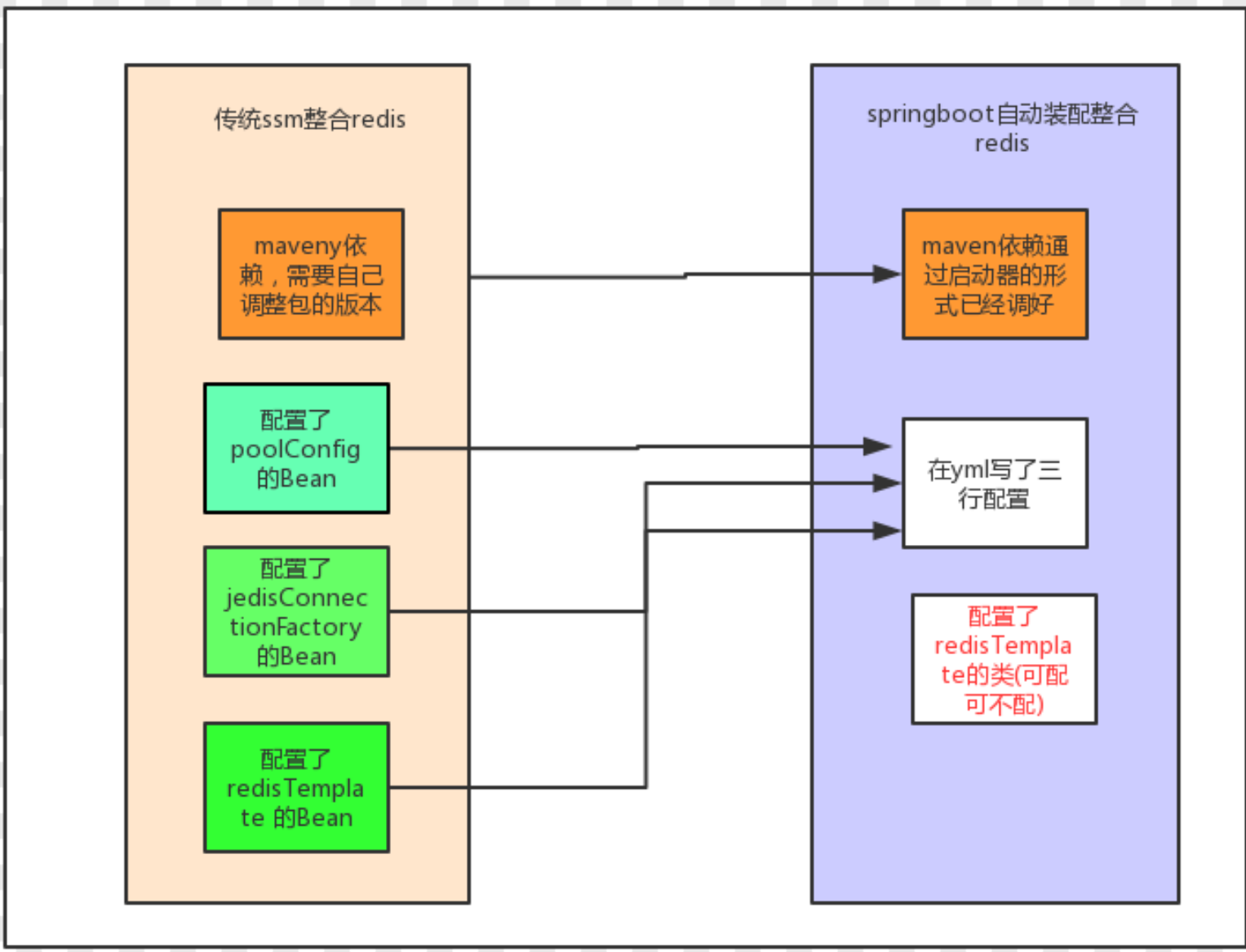
传统整合和springboot自动装配对比
传统整合:
自己引入依赖
版本冲突
配置复杂
自动装配
起步依赖
自动配置
约定 > 配置 > 编码
SpringBoot自动配置原理 @Condition Condition 是在Spring 4.0 增加的条件判断功能,通过这个可以功能可以根据系统中已有组件实现动态选择性的创建 Bean 操作 ,从而达到自动配置的目的。
思考: SpringBoot是如何知道要创建哪个Bean的?比如SpringBoot是如何知道要创建RedisTemplate的?
SpringBoot引入spring-data-redis坐标后,RedisAutoConfiguration配置类起作用
1 2 3 4 5 6 7 8 9 10 11 12 13 14 15 16 17 18 19 20 21 22 23 24 25 @Configuration(proxyBeanMethods = false) @ConditionalOnClass(RedisOperations.class) @EnableConfigurationProperties(RedisProperties.class) @Import({ LettuceConnectionConfiguration.class, JedisConnectionConfiguration.class }) public class RedisAutoConfiguration @Bean @ConditionalOnMissingBean(name = "redisTemplate") @ConditionalOnSingleCandidate(RedisConnectionFactory.class) public RedisTemplate<Object, Object> redisTemplate (RedisConnectionFactory redisConnectionFactory) new RedisTemplate<>();return template;@Bean @ConditionalOnMissingBean @ConditionalOnSingleCandidate(RedisConnectionFactory.class) public StringRedisTemplate stringRedisTemplate (RedisConnectionFactory redisConnectionFactory) new StringRedisTemplate();return template;
模仿使用 判断是否存在哪些类而注入当前类
1 2 3 4 5 6 7 8 9 10 11 12 13 14 15 16 17 18 19 20 21 22 23 24 25 26 27 28 29 30 31 32 33 34 35 36 37 38 39 40 41 42 43 44 45 46 47 48 49 50 51 52 1 、定义一个Condtion实现类public class MyCondition implements Condition @Override public boolean matches (ConditionContext conditionContext, AnnotatedTypeMetadata annotatedTypeMetadata) "value" );for (String s : className) {try {catch (ClassNotFoundException e) {return false ;return true ;2 、声明一个注解,用来接收要判断是否存在的类@Target({ElementType.TYPE, ElementType.METHOD}) @Retention(RetentionPolicy.RUNTIME) @Documented @Conditional(value = MyCondition.class) public @interface MyConditionOnClass {3 、@Configuration public class AutoConfig @Bean @MyConditionOnClass("com.study.springboot.Springboot02AutoconfigApplication") public Person person () return new Person("小帅" );public class Person private String name;public Person (String name) this .name = name;@Override public String toString () return "Person{" +"name='" + name + '\'' +'}' ;
小结 自定义条件: 第一步 定义条件类:
自定义类实现Condition接口,重写 matches 方法,在 matches 方法中进行逻辑判断,返回boolean值 。 matches 方法两个参数:
context:上下文对象,可以获取属性值,获取类加载器,获取BeanFactory等。
metadata:元数据对象,用于获取注解属性。
第二步 充当判断条件:
在初始化Bean时,使用 @Conditional(条件类.class)注解
SpringBoot 提供的常用条件注解: ConditionalOnProperty :判断配置文件中是否有对应属性和值才初始化Bean
ConditionalOnClass :判断环境中是否有对应字节码文件才初始化Bean
ConditionalOnMissingBean :判断环境中没有对应Bean实例才初始化Bean
@Enable* SpringBoot中提供了很多Enable开头的注解,这些注解都是用于动态启用某些功能的。而其底层原理是使用@Import注解导入一些配置类,实现Bean的动态加载
@Import注解 @Enable底层依赖于@Import注解导入一些类,使用@Import导入的类会被Spring加载到IOC容器中。而@Import提供4中用法:
导入配置类(最先注入)
导入 ImportSelector 实现类。一般用于加载配置文件中的类(返回new String[] 可以返回配置文件的key)
直接注入类
导入 ImportBeanDefinitionRegistrar 实现类(最后注入)。
@EnableAutoConfiguration
@EnableAutoConfiguration 注解内部使用 @Import(AutoConfigurationImportSelector.class)来加载配置类。
配置文件位置:META-INF/spring.factories ,该配置文件中定义了大量的配置类,当 SpringBoot 应用启动时,会自动加载这些配置类,初始化Bean
并不是所有的Bean都会被初始化,在配置类中使用Condition来加载满足条件的Bean
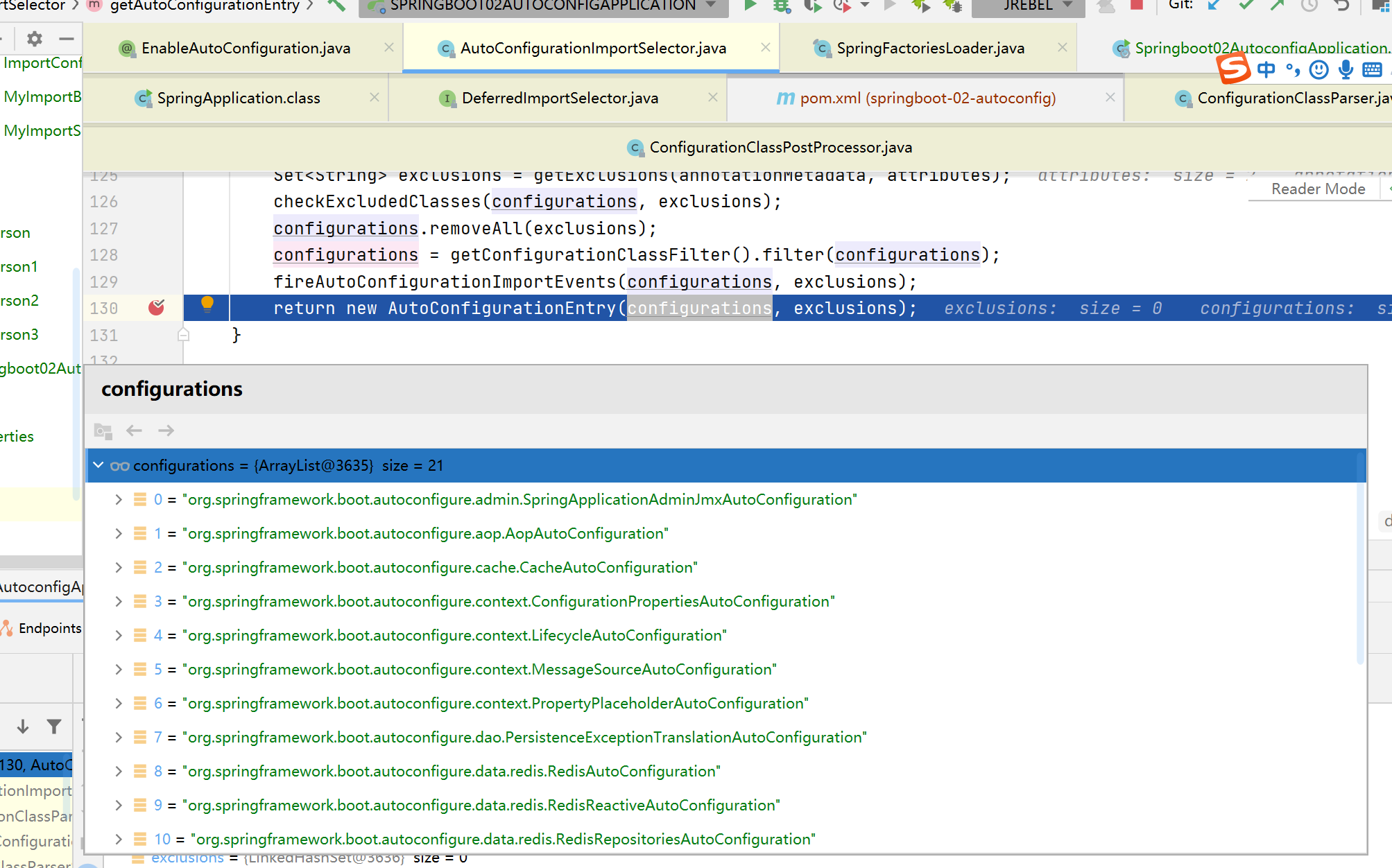
在本版本中(2.5.3)AutoConfigurationImportSelector实际起作用的是process()方法
1
2
3
4
5
6
7
8
9
10
11
12
13
14
15
16
17
18
@Override public void process (AnnotationMetadata annotationMetadata, DeferredImportSelector deferredImportSelector) instanceof AutoConfigurationImportSelector,"Only %s implementations are supported, got %s" ,this .autoConfigurationEntries.add(autoConfigurationEntry);for (String importClassName : autoConfigurationEntry.getConfigurations()) {this .entries.putIfAbsent(importClassName, annotationMetadata);
SpringFactoriesLoader:去spring.factories 中去查询EnableAutoConfirution类
1
2
3
4
5
6
7
8
public static List<String> loadFactoryNames (Class<?> factoryType, @Nullable ClassLoader classLoader) if (classLoaderToUse == null ) {return loadSpringFactories(classLoaderToUse).getOrDefault(factoryTypeName, Collections.emptyList());
最终筛选出需要自动配置的类
RedisAutoConfiguration 导入了三个组件
RedisTemplate
StringRedisTemplate
JedisConnectionConfiguration
1
2
3
4
5
6
7
8
9
10
11
12
13
14
15
16
17
18
19
20
21
22
23
@Configuration(proxyBeanMethods = false) @ConditionalOnClass(RedisOperations.class) @EnableConfigurationProperties(RedisProperties.class) @Import({ LettuceConnectionConfiguration.class, JedisConnectionConfiguration.class }) public class RedisAutoConfiguration @Bean @ConditionalOnMissingBean(name = "redisTemplate") @ConditionalOnSingleCandidate(RedisConnectionFactory.class) public RedisTemplate<Object, Object> redisTemplate (RedisConnectionFactory redisConnectionFactory) new RedisTemplate<>();return template;@Bean @ConditionalOnMissingBean @ConditionalOnSingleCandidate(RedisConnectionFactory.class) public StringRedisTemplate stringRedisTemplate (RedisConnectionFactory redisConnectionFactory) new StringRedisTemplate();return template;
总结 SpringBoot自动配置原理:简单来说就是通过
@SpringBootApplication ->
@EnableAutoConfiguration ->
@Import(AutoConfigurationImportSelector.class)
导入项目所有 META-INF/spring.factories 中所有org.springframework.boot.autoconfigure.EnableAutoConfiguration的值,再通过@condition、import,@ConfigurationProperties @EnableConfigurationProperties等系列注解达到根据环境自动注入配置的目的。
具体例子可见SpringBoot04篇章