一、IO模型介绍
BIO(Blocking IO)
1、是什么
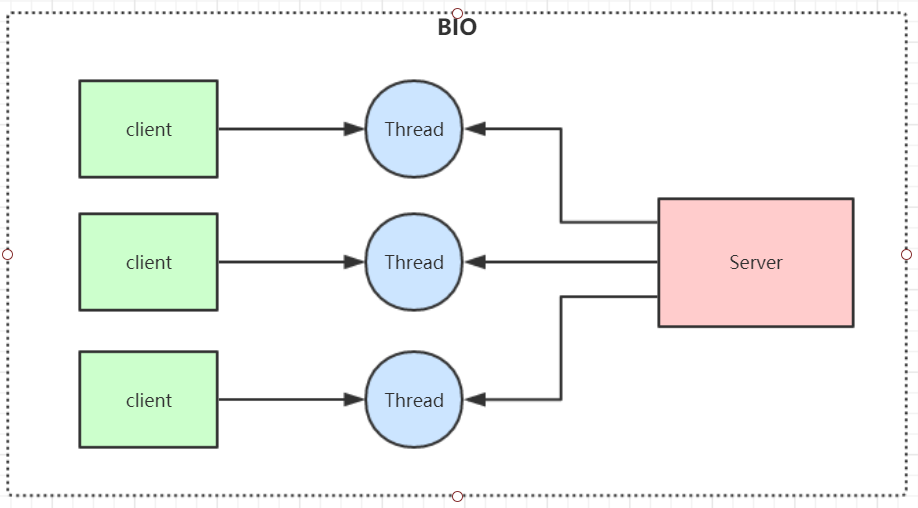
同步阻塞模型,一个客户端连接对应一个处理线程
2、缺点
1、IO代码里read操作是阻塞操作,如果连接不做数据读写操作会导致线程阻塞,浪费线程资源
2、如果线程很多,会导致服务器线程太多,压力太大。
3、应用场景
BIO方式适用于连接数目比较小且固定的架构, 这种方式对服务器资源要求比较高, 但程序简单易理解。
4、代码示例
1
2
3
4
5
6
7
8
9
10
11
12
13
14
15
16
17
18
19
20
21
22
23
24
25
26
27
28
29
30
31
32
33
34
35
36
37
38
39
40
41
42
43
44
45
46
47
48
49
50
51
52
53
54
55
56
57
58
59
60
| 服务端
public class SocketServer {
public static void main(String[] args) throws IOException {
ServerSocket serverSocket = new ServerSocket(9000);
while (true){
System.out.println("等待连接。。");
Socket accept = serverSocket.accept();
System.out.println("有客户端连接了。。");
new Thread(() -> {
try {
handler(accept);
} catch (IOException | InterruptedException e) {
e.printStackTrace();
}
}).start();
}
}
private static void handler(Socket socket) throws IOException, InterruptedException {
byte[] bytes = new byte[1024];
System.out.println("准备read。。");
int read = socket.getInputStream().read(bytes);
System.out.println("read完毕。。");
if (read != -1 ) {
System.out.println("接收到客户端的数据:" + new String(bytes, 0, read));
System.out.println("thread id = " + Thread.currentThread().getId());
}
socket.getOutputStream().write("HelloClient".getBytes("UTF-8"));
socket.getOutputStream().flush();
while (true){
Thread.sleep(1000L);
socket.getOutputStream().write("ping".getBytes("UTF-8"));
socket.getOutputStream().flush();
}
}
}
客户端
public class SocketClient {
public static void main(String[] args) throws IOException {
Socket socket = new Socket("localhost", 9000);
socket.getOutputStream().write("Hello Server".getBytes("UTF-8"));
socket.getOutputStream().flush();
System.out.println("向服务端发送数据结束");
byte[] bytes = new byte[1024];
int read = -1;
System.out.println("准备read。。");
while (-1 != (read = socket.getInputStream().read(bytes))){
System.out.println("接收到服务端的数据:" + new String(bytes, 0, read));
}
socket.close();
}
}
|
1
2
3
4
5
6
7
8
9
10
11
12
13
14
15
16
17
18
19
20
21
22
23
| Server:
等待连接。。
有客户端连接了。。
等待连接。。
准备read。。
read完毕。。
接收到客户端的数据:Hello Server
thread id = 12
有客户端连接了。。
等待连接。。
准备read。。
read完毕。。
接收到客户端的数据:Hello Server
thread id = 13
Client:
向服务端发送数据结束
准备read。。
接收到服务端的数据:HelloClient
接收到服务端的数据:ping
接收到服务端的数据:ping
接收到服务端的数据:ping
......
|
NIO(Non Blocking IO)
1、是什么
同步非阻塞,服务器实现模式为一个线程可以处理多个请求(连接),客户端发送的连接请求都会注册到多路复用器selector上,多路复用器轮询到连接有IO请求就进行处理。
I/O多路复用底层一般用的Linux API(select,poll,epoll)来实现,他们的区别如下表:
|
select |
poll |
epoll(jdk 1.5及以上) |
| 操作方式 |
遍历 |
遍历 |
回调 |
| 底层实现 |
数组 |
链表 |
哈希表 |
| IO效率 |
每次调用都进行线性遍历,时间复杂 度为O(n) |
每次调用都进行 线性遍历,时间 复杂度为O(n) |
事件通知方式,每当有IO事件就绪,系统注册的回调函数就会被调用,时间复杂度O(1) |
| 最大连接 |
有上限 |
无上限 |
无上限 |
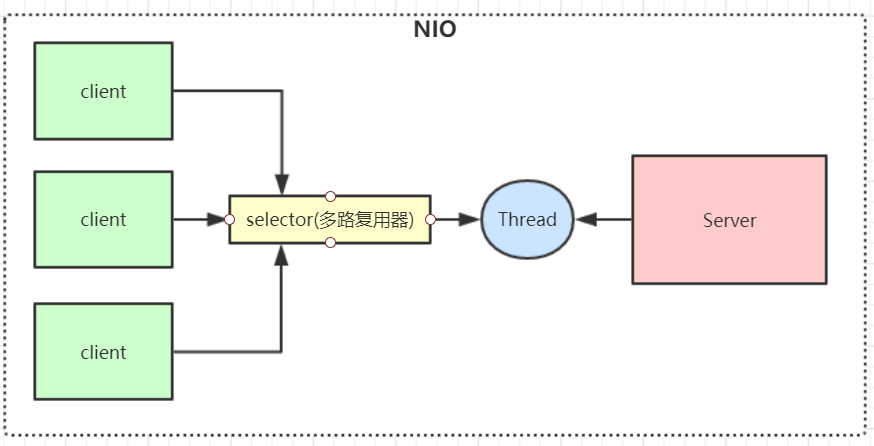
NIO 有三大核心组件: Channel(通道), Buffer(缓冲区),Selector(选择器)
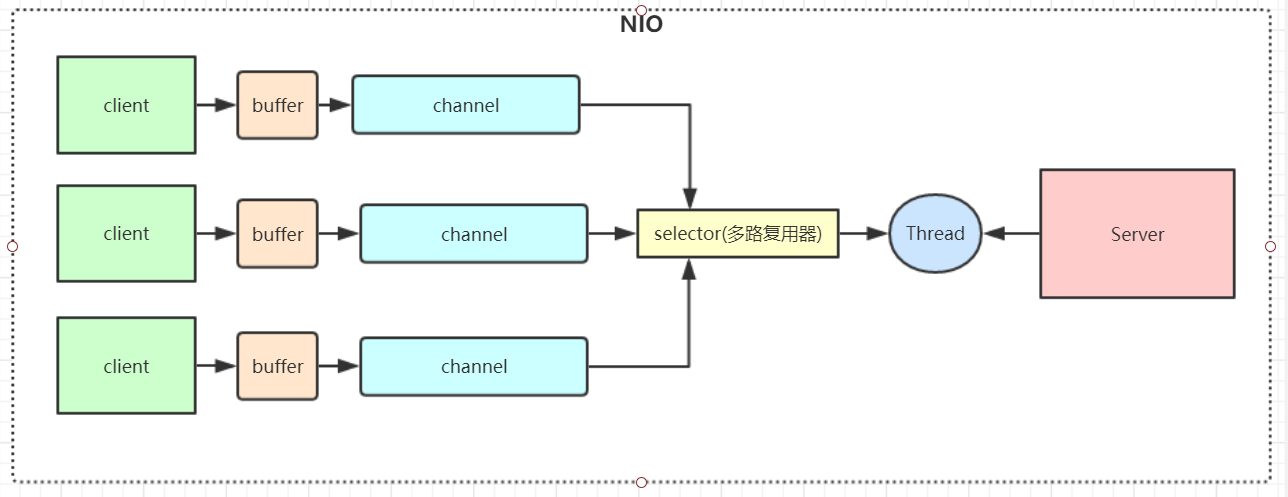
1、channel 类似于流,每个 channel 对应一个 buffer缓冲区,buffer 底层就是个数组
2、channel 会注册到 selector 上,由selector根据channel读写事件的发生将其交由某个空闲的线程处理
3、selector 可以对应一个或多个线程
4、NIO 的 Buffer 和 channel 都是既可以读也可以写
2、优点
一个线程可以处理多个请求,提高CPU资源利用率
3、应用场景
NIO方式适用于连接数目多且连接比较短(轻操作) 的架构, 比如聊天服务器, 弹幕系统, 服务器间通讯,编程比较复杂, JDK1.4 开始支持
4、示例代码
1
2
3
4
5
6
7
8
9
10
11
12
13
14
15
16
17
18
19
20
21
22
23
24
25
26
27
28
29
30
31
32
33
34
35
36
37
38
39
40
41
42
43
44
45
46
47
48
49
50
51
52
53
54
55
56
57
58
59
60
61
|
public class NIOServer {
public static void main(String[] args) throws IOException {
ServerSocketChannel ssc = ServerSocketChannel.open();
ssc.configureBlocking(false);
ssc.socket().bind(new InetSocketAddress(8888));
Selector selector = Selector.open();
ssc.register(selector, SelectionKey.OP_ACCEPT);
while (true){
System.out.println("等待事件发生。。");
int select = selector.select();
Iterator<SelectionKey> it = selector.selectedKeys().iterator();
while(it.hasNext()){
SelectionKey key = it.next();
it.remove();
handle(key);
}
}
}
private static void handle(SelectionKey key) throws IOException {
Scanner scanner = new Scanner(System.in);
if(key.isAcceptable()){
System.out.println("有客户端连接事件发生了。。");
ServerSocketChannel ssc = (ServerSocketChannel) key.channel();
SocketChannel sc = ssc.accept();
sc.configureBlocking(false);
sc.register(key.selector(),SelectionKey.OP_READ);
}else if(key.isReadable()){
System.out.println("有客户端数据可读事件发生了。。");
SocketChannel sc = (SocketChannel) key.channel();
ByteBuffer buffer = ByteBuffer.allocate(1024);
int len = sc.read(buffer);
if (len != -1) {
System.out.println("读取到客户端发送的数据:" + new String(buffer.array(), 0, len));
}
sc.write(ByteBuffer.wrap("收到 over".getBytes(StandardCharsets.UTF_8)));
}else if(key.isWritable()){
System.out.println("write事件");
SocketChannel sc = (SocketChannel) key.channel();
key.interestOps(SelectionKey.OP_READ);
}
}
}
|
1
2
3
4
5
6
7
8
9
10
11
12
13
14
15
16
17
18
19
20
21
22
23
24
25
26
27
28
29
30
31
32
33
34
35
36
37
38
39
40
41
42
43
44
45
46
47
48
49
50
51
52
53
54
55
56
57
58
59
60
61
62
63
64
65
66
67
68
|
public class NioClient {
private Selector selector;
Scanner scanner = new Scanner(System.in);
public static void main(String[] args) throws IOException {
NioClient client = new NioClient();
client.initClient("127.0.0.1",8888);
client.connect();
}
public void initClient(String ip, int port) throws IOException {
SocketChannel channel = SocketChannel.open();
channel.configureBlocking(false);
this.selector = Selector.open();
channel.connect(new InetSocketAddress(ip,port));
channel.register(selector, SelectionKey.OP_CONNECT);
}
public void connect() throws IOException {
while (true){
int select = selector.select();
Iterator<SelectionKey> it = selector.selectedKeys().iterator();
while (it.hasNext()){
SelectionKey selectionKey = it.next();
if(selectionKey.isConnectable()){
SocketChannel channel = (SocketChannel) selectionKey.channel();
channel.configureBlocking(false);
if(channel.isConnectionPending()){
channel.finishConnect();
}
ByteBuffer buffer = ByteBuffer.wrap(scanner.nextLine().getBytes());
channel.write(buffer);
channel.register(selector, SelectionKey.OP_READ);
}else if(selectionKey.isReadable()){
read(selectionKey);
}
it.remove();
}
}
}
public void read(SelectionKey key) throws IOException {
System.out.println("有数据可读事件发生了。。");
SocketChannel sc = (SocketChannel) key.channel();
ByteBuffer buffer = ByteBuffer.allocate(1024);
int len = sc.read(buffer);
if (len != -1) {
System.out.println("读取到服务端发送的数据:" + new String(buffer.array(), 0, len));
}
sc.write(ByteBuffer.wrap(scanner.nextLine().getBytes(StandardCharsets.UTF_8)));
}
}
|
1
2
3
4
5
6
7
8
9
10
11
12
13
14
15
16
17
18
19
20
21
22
23
24
|
等待事件发生。。
有客户端连接事件发生了。。
等待事件发生。。
有客户端数据可读事件发生了。。
读取到客户端发送的数据:1
等待事件发生。。
有客户端数据可读事件发生了。。
读取到客户端发送的数据:2
等待事件发生。。
有客户端数据可读事件发生了。。
读取到客户端发送的数据:3
等待事件发生。。
1
有数据可读事件发生了。。
读取到服务端发送的数据:收到 over
2
有数据可读事件发生了。。
读取到服务端发送的数据:收到 over
3
有数据可读事件发生了。。
读取到服务端发送的数据:收到 over
|
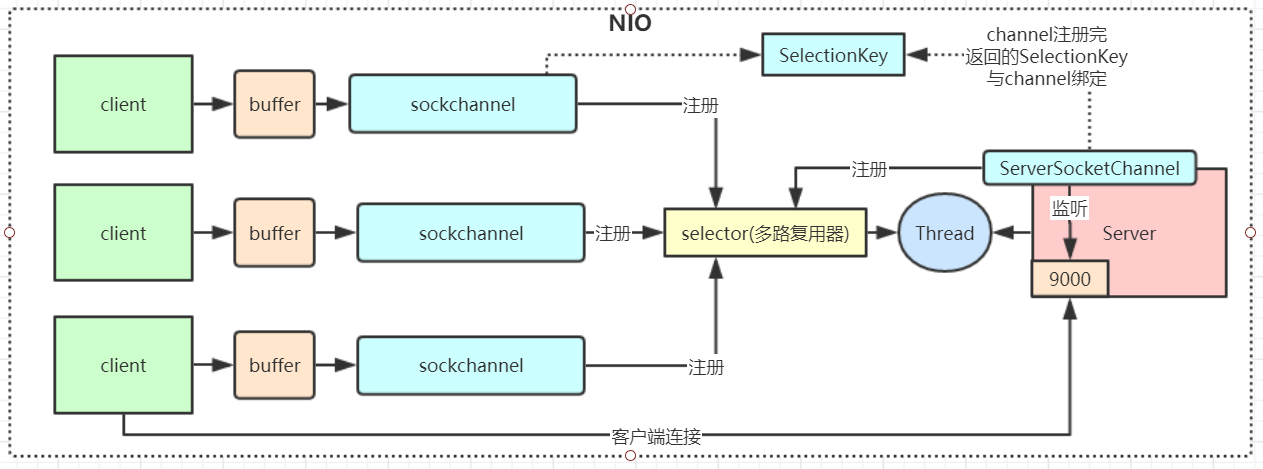
1、NIO服务端程序详细分析
1、创建一个 ServerSocketChannel 和 Selector ,并将 ServerSocketChannel 注册到 Selector 上
2、 selector 通过 select() 方法监听 channel 事件,当客户端连接时,selector 监听到连接事件, 获取到 ServerSocketChannel 注册时绑定的 selectionKey
3、selectionKey 通过 channel() 方法可以获取绑定的 ServerSocketChannel
4、ServerSocketChannel 通过 accept() 方法得到 SocketChannel
5、将 SocketChannel 注册到 Selector 上,关心 read 事件
6、注册后返回一个 SelectionKey, 会和该 SocketChannel 关联
7、selector 继续通过 select() 方法监听事件,当客户端发送数据给服务端,selector 监听到read事件,获取到 SocketChannel 注册时绑定的 selectionKey
8、selectionKey 通过 channel() 方法可以获取绑定的 socketChannel
9、将 socketChannel 里的数据读取出来
10、用 socketChannel将服务端数据写回客户端
2、总结
NIO模型的selector 就像一个大总管,负责监听各种IO事件,然后转交给后端线程去处理
NIO相对于BIO非阻塞的体现就在,BIO的后端线程需要阻塞等待客户端写数据(比如read方法),如果客户端不写数据线程就要阻塞,
NIO把等待客户端操作的事情交给了大总管 selector,selector 负责轮询所有已注册的客户端,发现有事件发生了才转交给后端线程处理,后端线程不需要做任何阻塞等待,直接处理客户端事件的数据即可,处理完马上结束,或返回线程池供其他客户端事件继续使用。还有就是 channel 的读写是非阻塞的。
Redis线程模型
Redis就是典型的NIO线程模型,selector收集所有连接的事件并且转交给后端线程,线程连续执行所有事件命令并将结果写回客户端
AIO(NIO 2.0)
1、是什么
异步非阻塞, 由操作系统完成后回调通知服务端程序启动线程去处理, 一般适用于连接数较多且连接时间较长的应用,比如相册服务器,充分调用 OS 参与并发操作,JDK7 开始支持。
2、代码实例
1
2
3
4
5
6
7
8
9
10
11
12
13
14
15
16
17
18
19
20
21
22
23
24
25
26
27
28
29
30
31
32
33
34
35
36
| public class AIOServer {
public static void main(String[] args) throws Exception {
final AsynchronousServerSocketChannel serverChannel = AsynchronousServerSocketChannel.open().bind(new InetSocketAddress(9000));
serverChannel.accept(null, new CompletionHandler<AsynchronousSocketChannel, Object>() {
@Override
public void completed(AsynchronousSocketChannel socketChannel, Object attachment) {
try {
serverChannel.accept(attachment,this);
System.out.println(socketChannel.getRemoteAddress());
ByteBuffer buffer = ByteBuffer.allocate(1024);
socketChannel.read(buffer,buffer, new CompletionHandler<Integer, ByteBuffer>() {
@Override
public void completed(Integer result, ByteBuffer attachment) {
buffer.flip();
System.out.println(new String(buffer.array(),0,result));
socketChannel.write(ByteBuffer.wrap("HelloClient".getBytes()));
}
@Override
public void failed(Throwable exc, ByteBuffer attachment) {
exc.printStackTrace();
}
});
} catch (IOException e) {
e.printStackTrace();
}
}
@Override
public void failed(Throwable exc, Object attachment) {
exc.printStackTrace();
}
});
Thread.sleep(Integer.MAX_VALUE);
}
}
|
1
2
3
4
5
6
7
8
9
10
11
12
| public class AIOClient {
public static void main(String[] args) throws IOException, ExecutionException, InterruptedException {
AsynchronousSocketChannel socketChannel = AsynchronousSocketChannel.open();
socketChannel.connect(new InetSocketAddress("127.0.0.1",9000)).get();
socketChannel.write(ByteBuffer.wrap("HelloServer".getBytes()));
ByteBuffer buffer = ByteBuffer.allocate(512);
Integer len = socketChannel.read(buffer).get();
if (len != -1) {
System.out.println("客户端收到信息:" + new String(buffer.array(), 0, len));
}
}
}
|
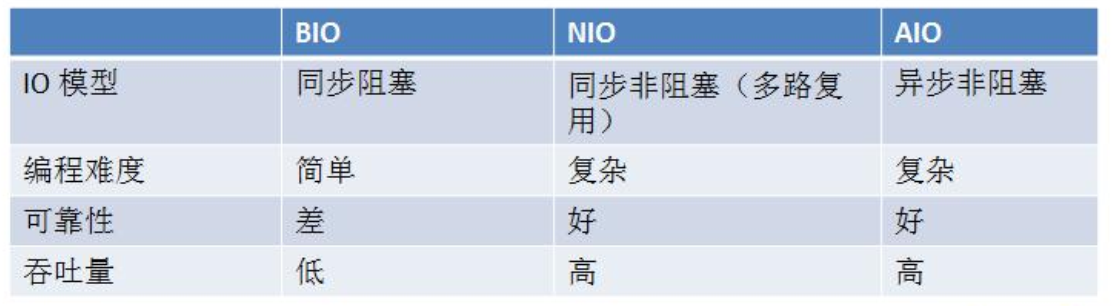
BIO、NIO、AIO 对比
同步异步与阻塞非阻塞(段子)
老张爱喝茶,废话不说,煮开水。
出场人物:老张,水壶两把(普通水壶,简称水壶;会响的水壶,简称响水壶)。
1 老张把水壶放到火上,立等水开。(同步阻塞)
老张觉得自己有点傻
2 老张把水壶放到火上,去客厅看电视,时不时去厨房看看水开没有。(同步非阻塞)
老张还是觉得自己有点傻,于是变高端了,买了把会响笛的那种水壶。水开之后,能大声发出嘀~~~~的噪音。
3 老张把响水壶放到火上,立等水开。(异步阻塞)
老张觉得这样傻等意义不大
4 老张把响水壶放到火上,去客厅看电视,水壶响之前不再去看它了,响了再去拿壶。(异步非阻塞)
老张觉得自己聪明了。
所谓同步异步,只是对于水壶而言。
普通水壶,同步;响水壶,异步。
虽然都能干活,但响水壶可以在自己完工之后,提示老张水开了。这是普通水壶所不能及的。
同步只能让调用者去轮询自己(情况2中),造成老张效率的低下。
所谓阻塞非阻塞,仅仅对于老张而言。
立等的老张,阻塞;看电视的老张,非阻塞。