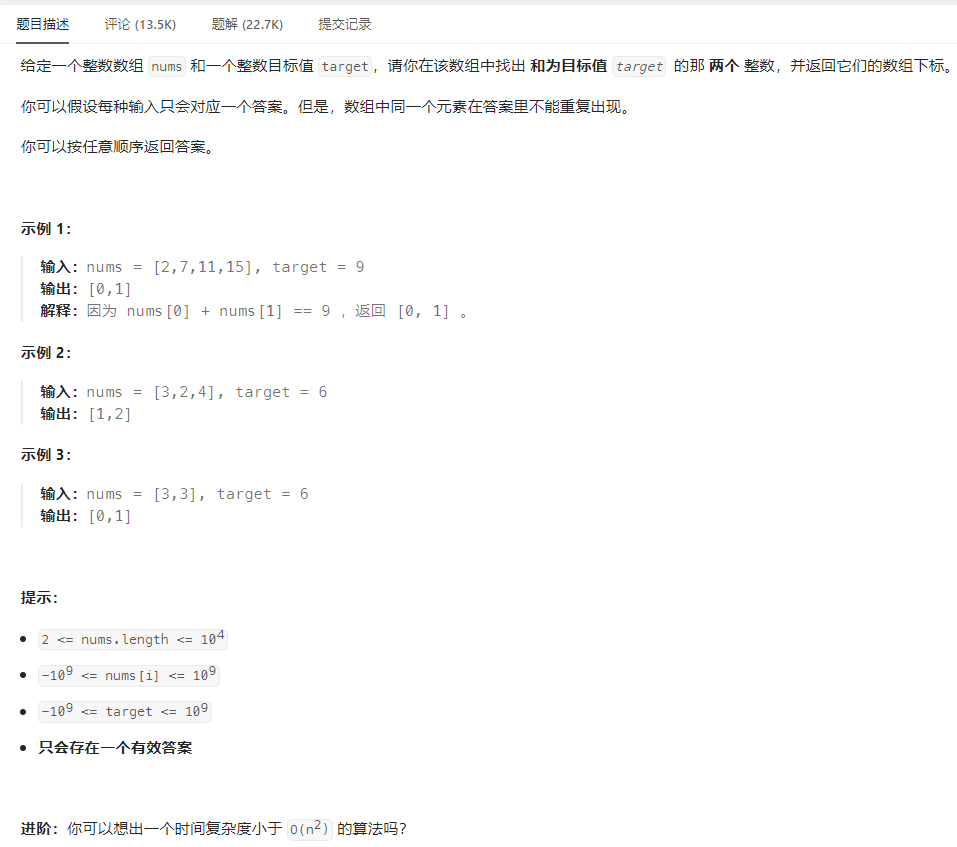
哈希 利用哈希集合或者哈希表来解题
1
2
3
4
5
6
7
8
9
10
11
12
13
14
15
16
17
18
19
20
21
22
23
24
25
public class A1_1 public int [] twoSum(int [] nums, int target) {int length = nums.length;for (int i = 0 ; i < length; i++) {int before = nums[i];for (int j = i+1 ; j < length; j++) {int after = nums[j];if ((before + after) == target){return new int []{i,j};return null ;
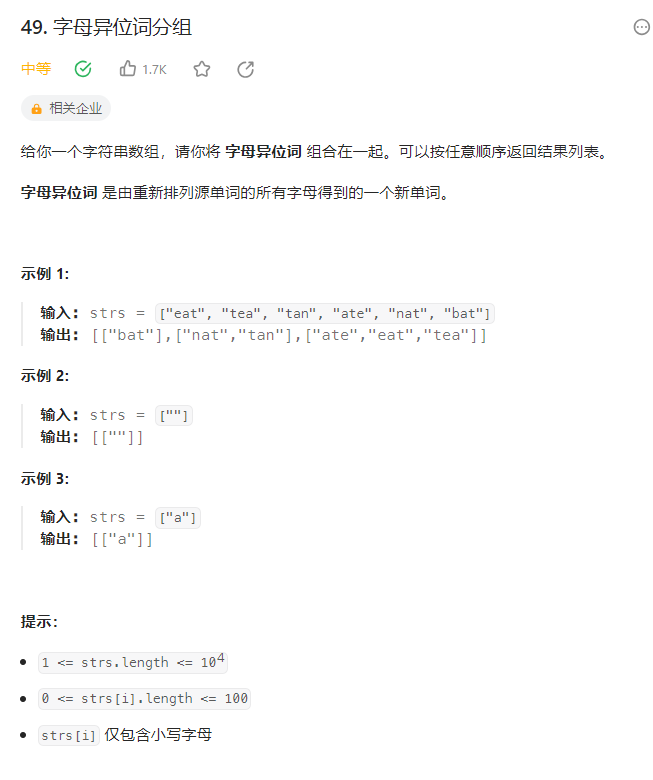
题意:把是字母异味词的字符放到一个集合里,输出所有集合
1
2
3
4
5
6
7
8
9
10
11
12
13
14
15
16
17
18
19
20
21
22
public class A_49 public List<List<String>> groupAnagrams(String[] strs) {new HashMap<>();for (String str : strs) {char [] chars = str.toCharArray();if (map.containsKey(sortStr)){else {new ArrayList<>();return new ArrayList<>(map.values());public static void main (String[] args) new A_49();new String[]{"eat" , "tea" , "tan" , "ate" , "nat" , "bat" }));
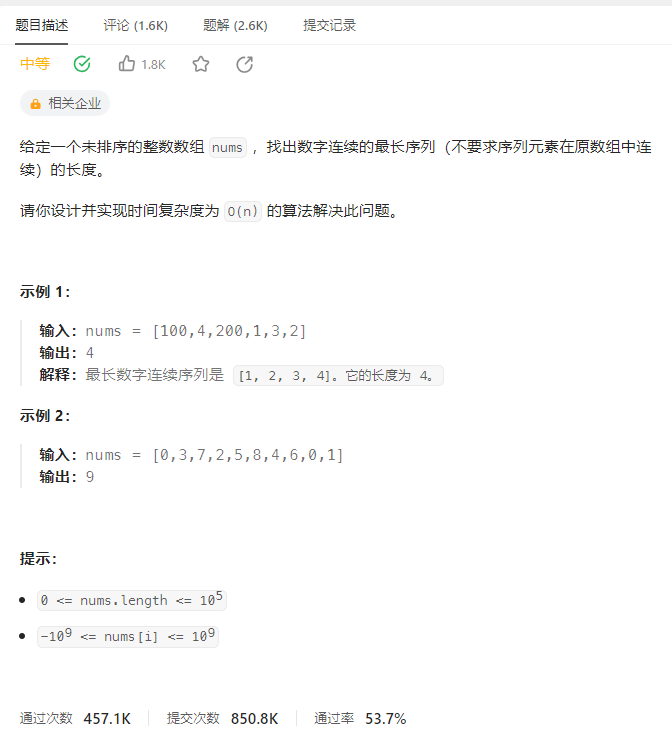
结题思路:
1、利用set存储所有元素,O(1)时间内判断是否拥有某个元素
2、外层遍历nums,只穷举set没有num-1的数,这样只需要递归往num+1的方向查找,整体来说外层一次for循环遍历了n次,内层while总共加起来=n次,总共2n次,所以时间复杂度是O(N)
1
2
3
4
5
6
7
8
9
10
11
12
13
14
15
16
17
18
19
20
21
22
23
24
25
26
27
28
29
public class A_128 public int longestConsecutive (int [] nums) new HashSet<Integer>();for (int i = 0 ; i < nums.length; i++) {int max = 0 ;for (int i = 0 ; i < nums.length; i++) {if (set.contains(nums[i]-1 )){continue ;else {int cur = nums[i];int continueLength = 1 ;while (set.contains(cur+1 )){return max;public static void main (String[] args) new A_128();new int []{100 ,4 ,200 ,1 ,3 ,2 }));new int []{1 ,2 ,0 ,1 }));
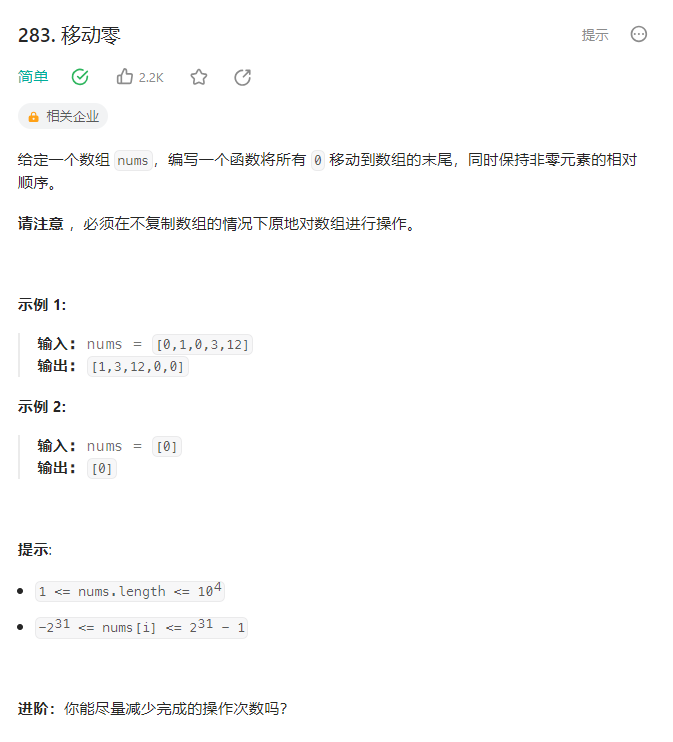
双指针
1
2
3
4
5
6
7
8
9
10
11
12
13
14
15
16
17
18
19
20
21
22
23
24
25
26
27
28
29
30
31
32
33
public void moveZeroes (int [] nums) int j = 0 ;for (int i = 0 ; i < nums.length; i++) {if (nums[i] == 0 ){1 );while (j < nums.length && nums[j] == 0 ){if (j < nums.length){public void swap (int [] nums,int left,int right) int temp = nums[left];public static void main (String[] args) new A1_283();int [] nums = {1 ,0 ,1 };for (int num : nums){" " );
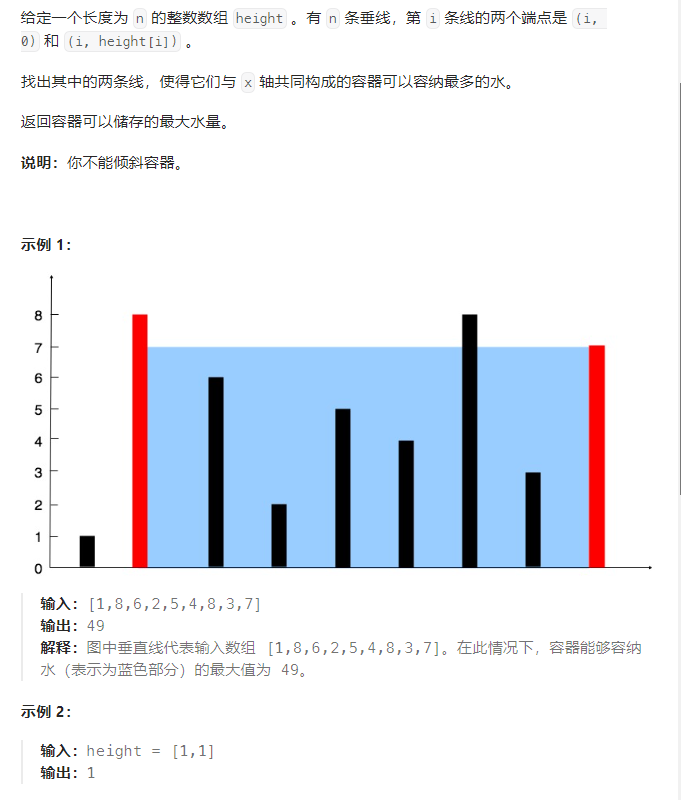
结题思路:左右指针分别位于2端,假设 leftValue < rightValue,则向右移动leftIndex(因为即便向左移动了右端,左值与右值的较小数也不会大于左值,但2端的宽度变小,面积必然小于移动前,因此向左移动右端只会越来越小,这个左指针对应的数不会作为容器的边界了,一开始在左端,因此只能向右移动 )
1
2
3
4
5
6
7
8
9
10
11
12
13
14
15
16
17
18
19
20
21
22
23
24
public int maxArea (int [] height) int area = 0 ;int beforeMax = 0 ;int l = 0 ;int r = height.length-1 ;while (l < r){int left = height[l];int right = height[r];if (left < right){else {return area;public static void main (String[] args) new A2_11();int [] nums = {1 ,8 ,6 ,2 ,5 ,4 ,8 ,3 ,7 };
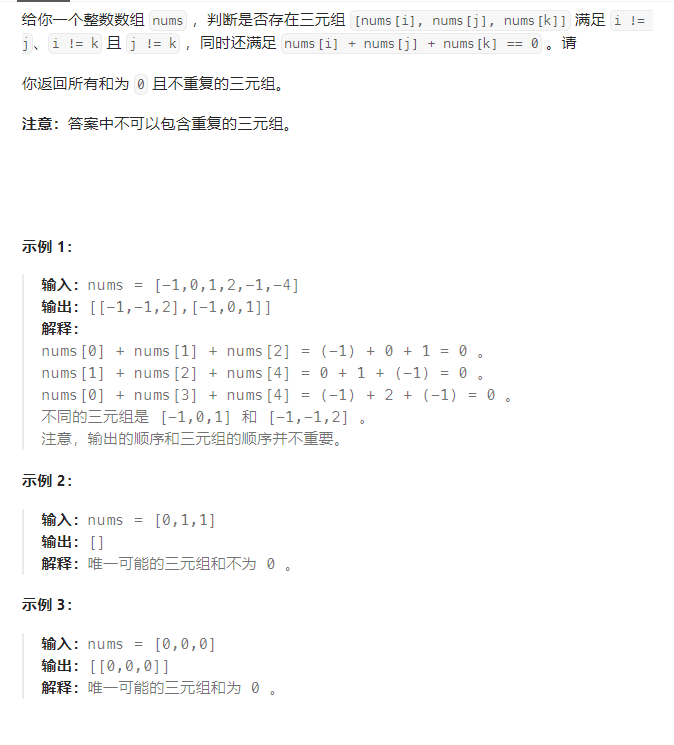
解题思路 :从暴力解法出发,思考如何降低复杂度。排序后,固定第一个数,问题转化成第二个数+第三个数之和=某个固定数,利用双指针指向第2、3个数。
1
2
3
4
5
6
7
8
9
10
11
12
13
14
15
16
17
18
19
20
21
22
23
24
25
26
27
28
29
30
31
32
33
34
35
36
37
38
39
40
41
42
43
44
45
46
public List<List<Integer>> threeSum(int [] nums) {new ArrayList<>();if (nums == null || nums.length <3 ){return result;for (int i = 0 ; i < nums.length; i++) {int first = nums[i];if (first > 0 ){break ;if (i > 0 && nums[i] == nums[i-1 ] ) {continue ;int l = i+1 ;int r = nums.length - 1 ;while (l < r){int second = nums[l];int third = nums[r];int sum = first + second + third;if (sum == 0 ){while (l < r && nums[l] == nums[l+1 ]){while (l < r && nums[r] == nums[r-1 ]){else if (sum > 0 ){else {return result;
1 2 3 4 5 6 7 8 9 10 11 12 13 14 15 16 17 18 19 20 21 22 23 24 25 26 27 28 29 30 31 32 public List<List<Integer>> threeSum2(int [] nums) {new ArrayList<>();if (null == nums || nums.length < 3 ){return result;new HashMap<>();for (int i = 0 ; i < nums.length; i++) {for (int i = 0 ; i < nums.length; i++) {if (i>0 && nums[i]== nums[i-1 ]){continue ;for (int j = i+1 ; j < nums.length; j++) {if (j != i+1 && nums[j]== nums[j-1 ]){continue ;int pre = -(nums[i] + nums[j]);if (map.containsKey(pre) && map.get(pre) > j){return result;
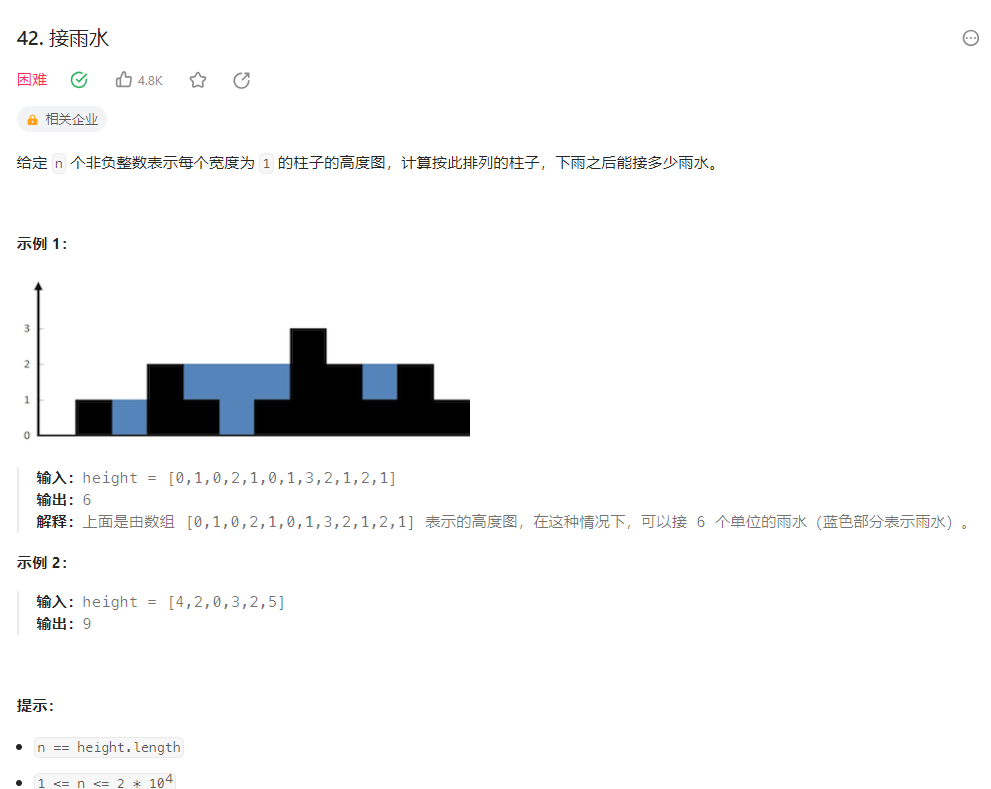
结题思路:对于每个格子来说,当前格子能接到的雨水取决于左右2边是否都大于当前高度,且当前格子的水量=min(左边最高高度,右边最高高度)- 当前高度,先通过遍历维护每个格子的左、右最高高度,减少时间复杂度
想通过
1 2 3 4 5 6 7 8 9 10 11 12 13 14 15 16 17 18 19 20 21 22 23 24 25 26 public int trap1 (int [] height) if (height.length < 3 ){return 0 ;int sum = 0 ;int [] leftHeight = new int [height.length];int [] rightHeight = new int [height.length];for (int i = 1 ; i < height.length; i++) {1 ],leftHeight[i-1 ]);for (int i = height.length-2 ; i >=0 ; i--) {1 ],rightHeight[i+1 ]);for (int i = 0 ; i < height.length; i++) {int cur = height[i];int relativeMin = Math.min(leftHeight[i],rightHeight[i]);if (relativeMin <= cur){0 ;else {return sum;
滑动窗口 解题思路:滑动窗口,顾名思义,可以通过问题映射控制窗口的2边,先滑动右边,达到特殊条件时,缩小左边,直至右边划到终点。该题就是通过map来判断是否应该继续右边滑动,
1
2
3
4
5
6
7
8
9
10
11
12
13
14
15
16
17
18
19
20
21
22
23
public int lengthOfLongestSubstring (String s) int left = 0 ;int right = 0 ;int count = 0 ;new HashMap<>();while (right < s.length()){char c = s.charAt(right);if (map.containsKey(c) && map.get(c) >= left){1 ;else {1 );return count;
结题思路:窗口的滑动条件比第一题复杂:初始化p的字符数组然后维护数组每个元素不小于0。 开始向右滑动窗口,减去并相应字符,如果频率小于0就收缩左侧边界直到频率不再小于0。窗口长度与p长度一致时达成条件
1
2
3
4
5
6
7
8
9
10
11
12
13
14
15
16
17
18
19
20
21
22
23
24
25
26
27
public List<Integer> findAnagrams (String s, String p) int pLength = p.length();new ArrayList<>();int [] pCount= new int [26 ];for (int i = 0 ; i < pLength; i++) {'a' ];int l = 0 ;int r = 0 ;while (r < s.length()){char rChar = s.charAt(r);'a' ];while (pCount[rChar - 'a' ] < 0 && l <= r){'a' ];if (r - l + 1 == pLength){return result;
1 2 3 4 5 6 7 8 9 10 11 12 13 14 15 16 17 18 19 20 21 22 23 24 25 26 27 28 29 30 31 32 33 public List<Integer> findAnagrams1 (String s, String p) int pLength = p.length();new ArrayList<>();new HashMap<>();for (int i = 0 ; i < pLength; i++) {char c = p.charAt(i);0 )+1 );int l = 0 ;int r = 0 ;while (r < s.length()){char rchar = s.charAt(r);0 )-1 );while (needCount.get(rchar) < 0 && l <= r){char lchar = s.charAt(l);1 );if (r - l + 1 == pLength){return result;
子串
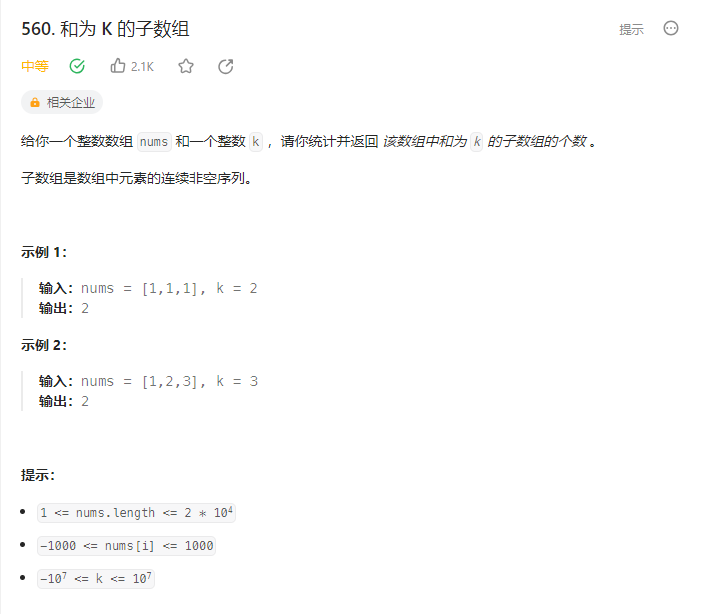
解题思路:pre[i] = [0..i]的所有数的和,则pre[i] = pre[i-1] + nums[i] ,那么sum[j..i] = k则表示为
pre[i] - pre[j-1] = k ==> pre[j-1] = pre[i] - k,如果pre[j-1]存在,则结果集加一
1 2 3 4 5 6 7 8 9 10 11 12 13 14 15 16 17 18 19 20 21 22 23 24 public int subarraySum2 (int [] nums, int k) int count = 0 ;int pre = 0 ;new HashMap<>();0 ,1 );for (int i = 0 ; i < nums.length; i++) {int num = nums[i];if (dataMap.containsKey(pre-k)){0 ) + 1 );return count;
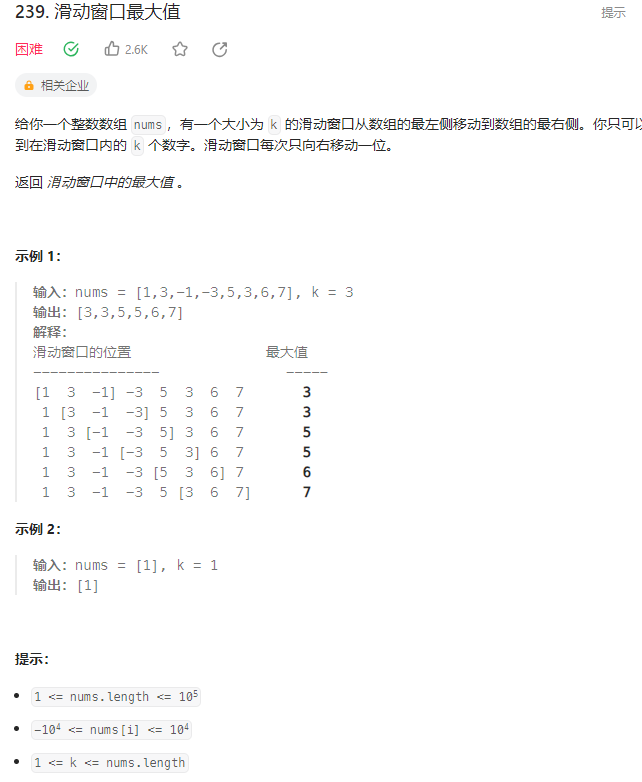
解题思路:基础解法是滑动窗口,窗口内的维护逻辑利用大顶堆,值大的在堆顶,每次取出堆顶时,判断堆顶元素的下标是不是超过左边界,因此堆的存储内容是int[],第一个元素存储值,第二个元素存储下标
1 2 3 4 5 6 7 8 9 10 11 12 13 14 15 16 17 18 19 20 21 22 23 24 25 26 27 28 29 public int [] maxSlidingWindow2(int [] nums, int k) {int length = nums.length;int [] ras = new int [length-k+1 ];int []> queue = new PriorityQueue<int []>((e1,e2) -> {if (e2[0 ] != e1[0 ]){return e2[0 ] - e1[0 ];else {return e2[1 ] - e1[1 ];for (int i = 0 ; i < length; i++) {int num = nums[i];new int []{num,i});while (queue.peek()[1 ] <= i - k){if (i >= k-1 ){1 ] = queue.peek()[0 ];return ras;
1 2 3 4 5 6 7 8 9 10 11 12 13 14 15 16 17 18 19 20 21 22 23 24 25 26 27 28 29 30 public int [] maxSlidingWindow(int [] nums, int k) {new LinkedList();int [] result = new int [nums.length - k + 1 ];for (int right = 0 ; right < nums.length; right++) {while (!queue.isEmpty() && nums[right] > nums[queue.getLast()]){int left = right - k + 1 ;if (queue.peekFirst() < left){if (right + 1 >= k ){return result;
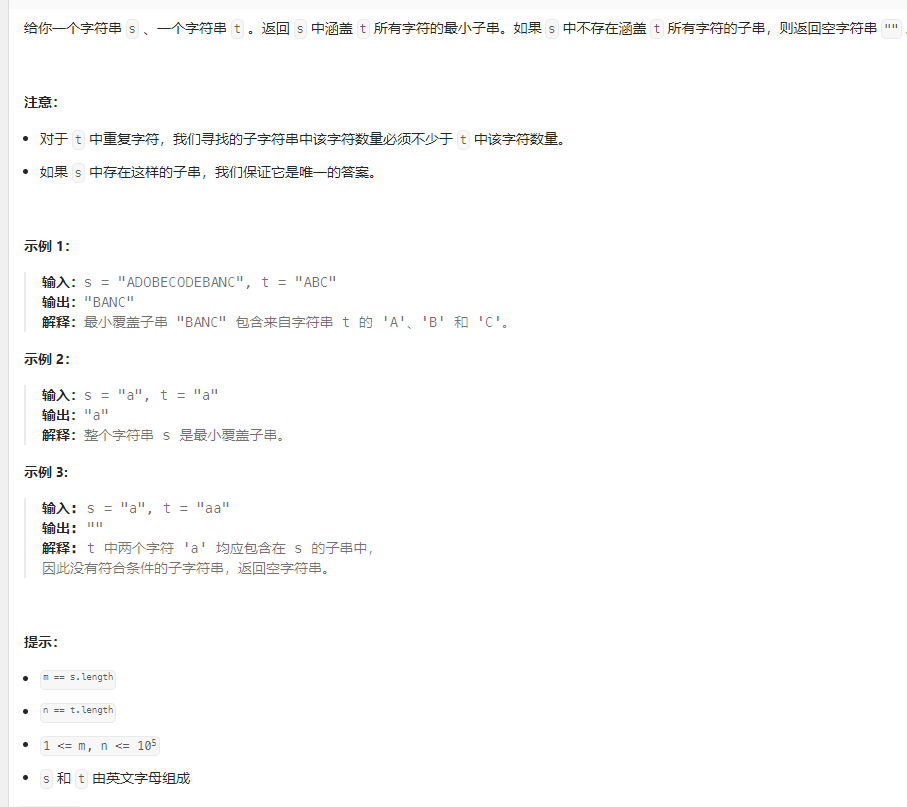
解题思路: 该题的突破点还是在滑动窗口内,使用合适的数据结构配合,来确认窗口内是否满足覆盖t的所有字符,而且t中字符存在重复的场景;
1、适用int[] tFreq来表示t中需要出现字符的次数
2、使用needCount表示窗口内还缺少的t中字符的个数,用该变量来判断是否满足串口覆盖t
3、其中tFreq的某个字符频次<0时,比如=-1,其实是非t中字符出现了,原本是0,r右移多出了一个无关字符-1,l右移时,对应加上1即可
1
2
3
4
5
6
7
8
9
10
11
12
13
14
15
16
17
18
19
20
21
22
23
24
25
26
27
28
29
30
31
32
33
34
35
36
37
public String minWindow (String s, String t) int sLength = s.length();int tLength = t.length();int match = 0 ;if (sLength < tLength){return "" ;"" ;int [] tNeedCount = new int [128 ];for (int i = 0 ; i < tLength; i++) {int l,r;0 ;while (r < sLength){char rchar = s.charAt(r);if (tNeedCount[rchar] > 0 ){if (match == tLength){while (tNeedCount[s.charAt(l)] < 0 ){1 < result.length() || result.isEmpty())?s.substring(l,r+1 ):result;return result;
普通数组
解题思路: f(x) = Math.max(nums[x],nums[x]+f(x-1)),f(x):以x结尾的连续子数组的最大和
1 2 3 4 5 6 7 8 9 10 11 12 13 14 15 16 17 18 public int maxSubArray1 (int [] nums) int pre = 0 ;int maxAns = nums[0 ];for (int x : nums) {return maxAns;
1
2
3
4
5
6
7
8
9
10
11
12
13
14
15
16
17
18
19
20
public int [][] merge(int [][] intervals) {0 ] - e2[0 ]);int []> result = new ArrayList<>();for (int i = 0 ; i < intervals.length; i++) {if (i == 0 ){0 ]);continue ;int [] pre = result.get(result.size()-1 );int [] cur = intervals[i];if (pre[1 ] < cur[0 ]){else {1 ] = Math.max(pre[1 ],cur[1 ]);return result.toArray(new int [result.size()][]);
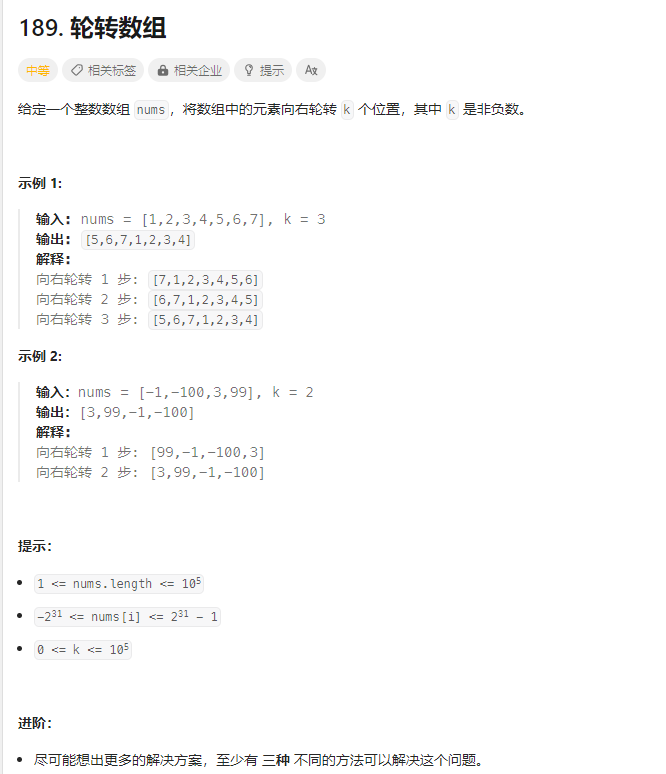
解题思路:这里采用额外空间结题
1、利用额外数组存储计算后的值
2、利用翻转算法
1
2
3
4
5
6
7
8
9
10
11
12
13
14
15
16
public void rotate (int [] nums, int k) int length = nums.length;int addK = k % length;if (addK == 0 ){return ;else {int [] result = new int [length];for (int i = 0 ; i < length; i++) {int nextIndex = (i + addK) % length;for (int i = 0 ; i < result.length; i++) {
题解:f(i)=beforeMulti(i) * afterMulti(i):i之前数组的乘积 + i之后元素素组的乘积
1 2 3 4 5 6 7 8 9 10 11 12 13 14 15 16 17 18 19 20 21 22 23 24 25 26 27 28 29 30 31 32 public int [] productExceptSelf2(int [] nums) {int [] result = new int [nums.length];int [] beforeMulti = new int [nums.length];int [] afterMulti = new int [nums.length];int multi = 1 ;for (int i = 0 ; i < nums.length; i++) {if (i == 0 ){else {1 ] * nums[i-1 ];1 ;for (int i = nums.length-1 ; i >= 0 ; i--) {if (i == nums.length-1 ){else {1 ] * nums[i+1 ];for (int i = 0 ; i < nums.length; i++) {return result;
题解: 如果利用map,可以遍历一次后维护所有key,遍历x属于1到N+1,判断key如果不存在x,则答案=x
1、但是map的空间复杂度=O(N),map可以在O(1)时间内判断x是否出现过
2、我们要找的数就在 [1, N + 1] 里,最后 N + 1 这个元素我们不用找。因为在前面的 N 个元素都找不到的情况下,我们才返回 N + 1;那么,我们可以采取这样的思路:就把 1 这个数放到下标为 0 的位置, 2 这个数放到下标为 1 的位置,按照这种思路整理一遍数组。然后我们再遍历一次数组,第 1 个遇到的它的值不等于下标的那个数,就是我们要找的缺失的第一个正数。这个思想就相当于我们自己编写哈希函数,这个哈希函数的规则特别简单,那就是数值为 i 的数映射到下标为 i - 1 的位置。
1 2 3 4 5 6 7 8 9 10 11 12 13 14 15 16 17 18 19 20 21 22 23 24 25 public int firstMissingPositive (int [] nums) int length = nums.length;for (int i = 0 ; i < length; i++) {while (0 < nums[i] && nums[i] <= length && nums[nums[i]-1 ] != nums[i]){1 );for (int i = 0 ; i < length; i++) {if (nums[i] != i+1 ){return i+1 ;return length + 1 ;public static void swap (int [] arr,int left,int right) int temp = arr[left];
矩阵
1
2
3
4
5
6
7
8
9
10
11
12
13
14
15
16
17
18
19
20
21
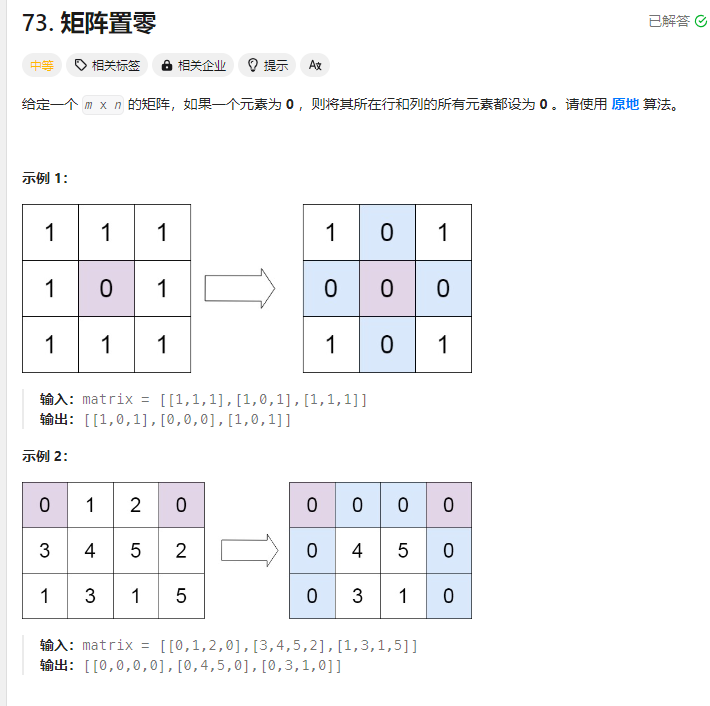
public void setZeroes (int [][] matrix) int xLength = matrix.length;int yLength = matrix[0 ].length;boolean [] x = new boolean [xLength];boolean [] y = new boolean [yLength];for (int i = 0 ; i < xLength; i++) {for (int j = 0 ; j < yLength; j++) {if (matrix[i][j] == 0 ) {true ;for (int i = 0 ; i < xLength; i++) {for (int j = 0 ; j < yLength; j++) {if (x[i] || y[j]) {0 ;
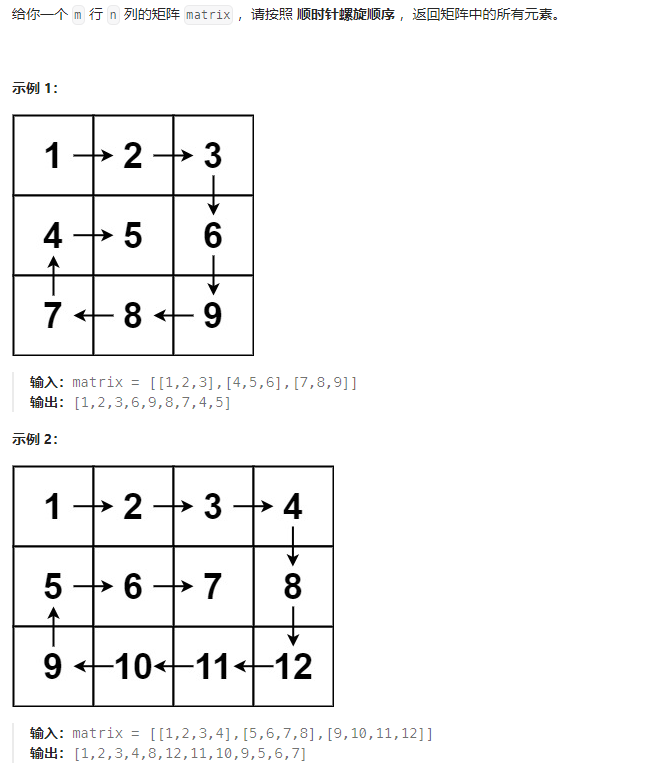
**解题思路:**从左到右,上到下,右到左,下到上轮流遍历
1
2
3
4
5
6
7
8
9
10
11
12
13
14
15
16
17
18
19
20
21
22
23
24
25
26
27
28
29
30
31
32
33
34
35
36
private List<Integer> spiralOrder1 (int [][] matrix) new ArrayList<>();if (Objects.isNull(matrix) || matrix.length == 0 ){return result;int left = 0 ;int right = matrix[0 ].length - 1 ;int top = 0 ;int bottom = matrix.length - 1 ;int x = 0 ,y = 0 ;int resultCount = (right+1 ) * (bottom+1 );while (resultCount != result.size()){for (int i = left; i <= right && resultCount != result.size(); i++) {for (int i = top; i <= bottom && resultCount != result.size(); i++) {for (int i = right; i >= left && resultCount != result.size(); i--) {for (int i = bottom; i >= top && resultCount != result.size(); i--) {return result;
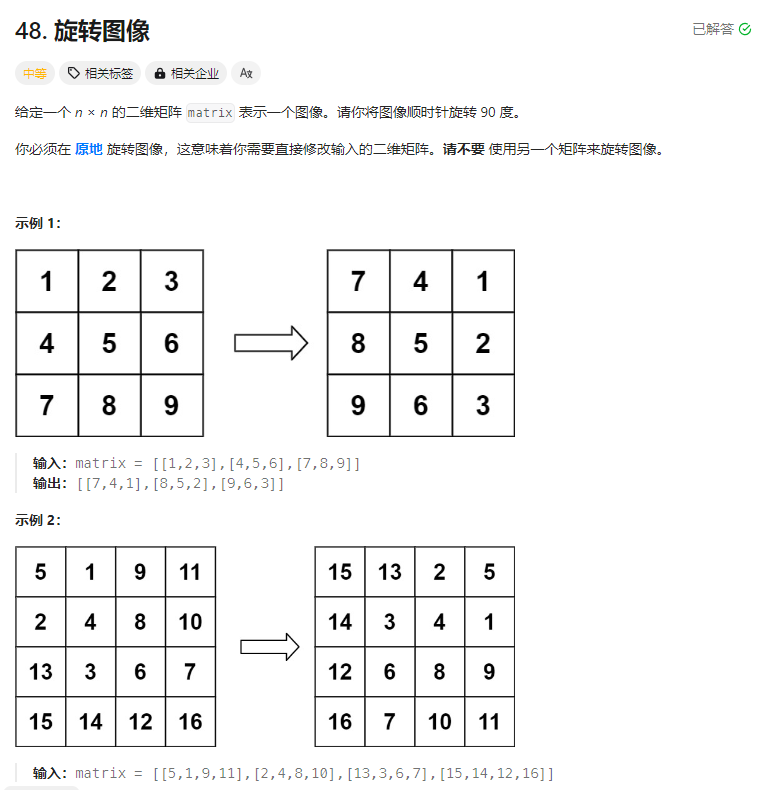
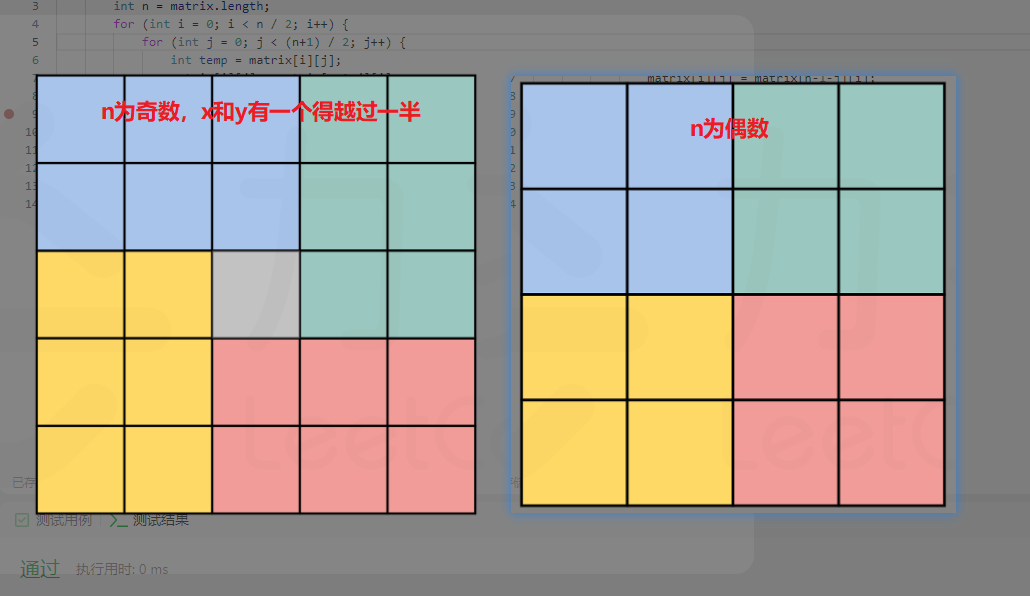
1 2 3 4 5 6 7 8 9 10 11 12 13 14 15 16 17 18 19 20 21 22 23 24 25 26 27 28 29 30 31 32 33 34 35 36 37 38 39 40 41 42 43 44 45 46 47 48 49 public void rotate1 (int [][] matrix) int n = matrix.length;for (int i = 0 ; i < (n+1 ) / 2 ; i++) {for (int j = 0 ; j < n / 2 ; j++) {int temp = matrix[i][j];1 -j][i];1 -j][i] = matrix[n-1 -i][n-1 -j];1 -i][n-1 -j] = matrix[j][n-1 -i];1 -i] = temp;public void rotate (int [][] matrix) int n = matrix.length;int [][] matrix_new = new int [n][n];for (int i = 0 ; i < n; ++i) {for (int j = 0 ; j < n; ++j) {1 ] = matrix[i][j];for (int i = 0 ; i < n; ++i) {for (int j = 0 ; j < n; ++j) {
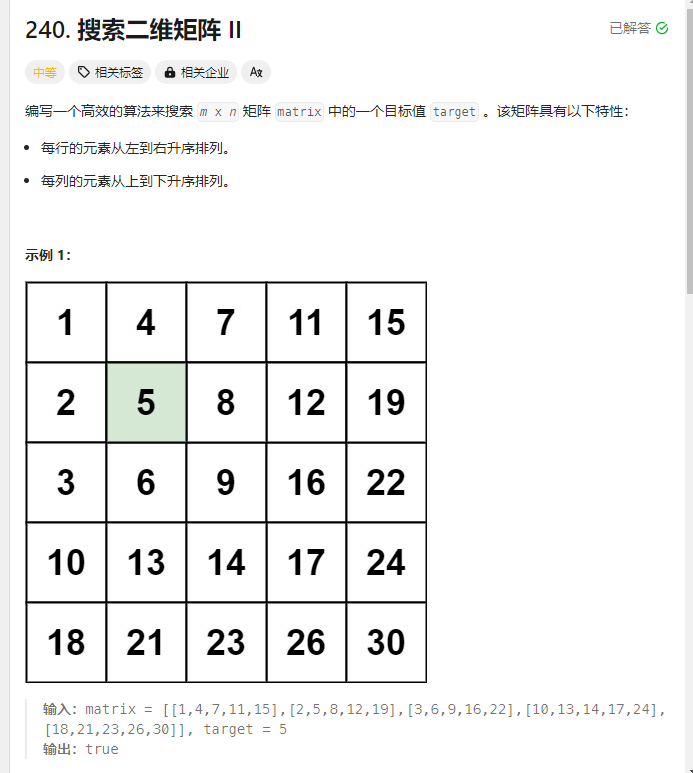
1 2 3 4 5 6 7 8 9 10 11 12 13 14 15 16 17 18 19 20 21 22 23 24 25 public boolean searchMatrix1 (int [][] matrix, int target) int row = matrix.length;int col = matrix[0 ].length;int i = row-1 ;int j = 0 ;while (i >= 0 && j <= col-1 ){if (matrix[i][j] == target){return true ;else if (matrix[i][j] > target){else {return false ;
链表
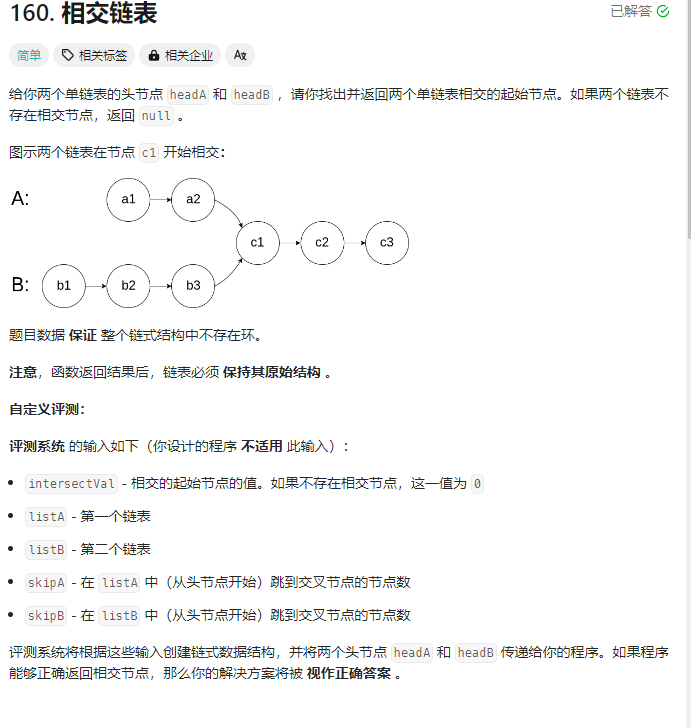
解题思路:
1、利用List存储某一个链表,让后遍历第二个链表
2、利用a + b + c = b + c +a的原理,两边同时遍历,遍历到尾后从另一个链表头从新开始,如果有交点,则会在交点相遇;
1 2 3 4 5 6 7 8 9 10 11 12 13 14 15 16 17 18 public ListNode getIntersectionNode3 (ListNode headA, ListNode headB) if (headA == null || headB == null ) {return null ;while (pA != pB) {null ? headB : pA.next;null ? headA : pB.next;return pA;
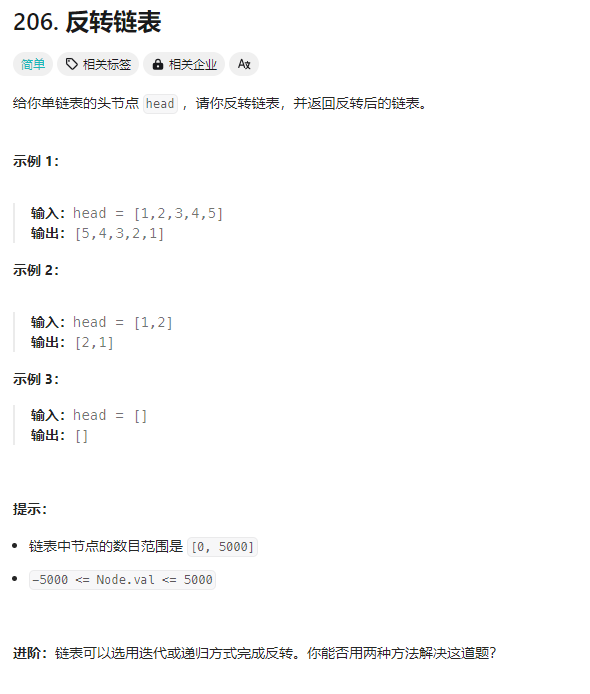
解题思路:
1、迭代处理
2、递归算法
1 2 3 4 5 6 7 8 9 10 11 12 13 14 15 16 17 18 19 20 21 22 23 24 25 26 27 28 29 30 31 32 public ListNode reverseList1 (ListNode head) if (head != null && head.next != null ) {null ;return listNode;public ListNode reverseList (ListNode head) null ;while (curr != null ){return prev;
1 2 3 4 5 6 7 8 9 10 11 12 13 14 15 16 17 18 19 20 21 22 23 24 25 26 27 28 29 30 31 32 33 34 35 36 37 38 39 40 41 42 43 44 45 46 47 48 49 50 51 52 53 54 55 56 57 58 59 60 61 62 63 64 65 66 67 68 69 public boolean isPalindrome2 (ListNode head) new ArrayList<>();while (null != cur){int beginIndex = 0 ;int lastIndex = list.size()-1 ;while (beginIndex < lastIndex){if (list.get(beginIndex).val != list.get(lastIndex).val){return false ;return true ;public ListNode reverseList (ListNode head) null ;while (curr != null ){return prev;public boolean isPalindrome1 (ListNode head) if (head == null ){return false ;while (rigth.next != null && rigth.next.next!=null ){while (rightNodeHead != null ){if (leftNodeHead.val != rightNodeHead.val){return false ;return true ;
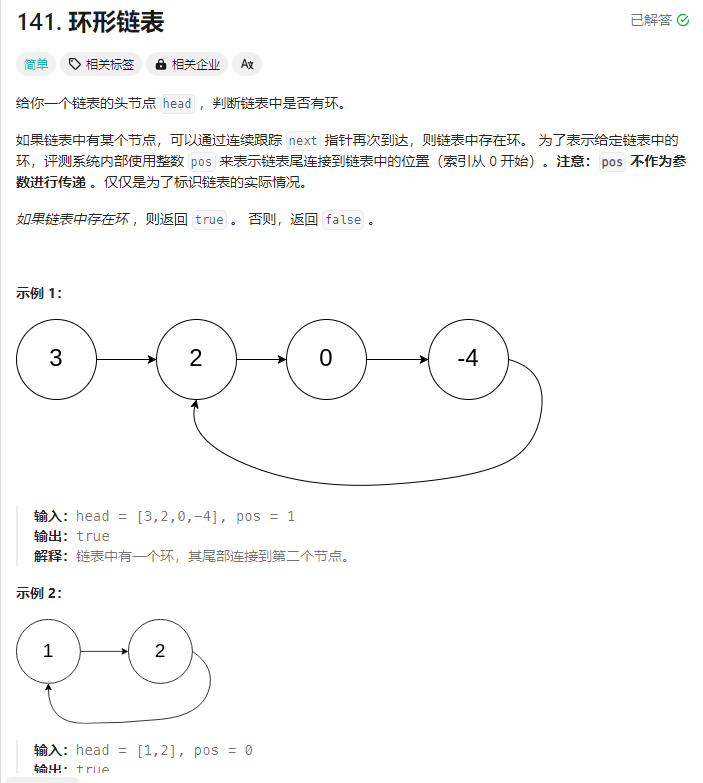
解题思路:
1、利用list,一边遍历一边判断是否包含
2、快慢指针
1
2
3
4
5
6
7
8
9
10
11
12
13
14
15
16
17
18
19
20
21
22
23
24
25
26
27
28
29
30
public boolean hasCycle (ListNode head) new ArrayList<>();while (head != null ){if (nodes.contains(head)){return true ;return false ;public boolean hasCycle1 (ListNode head) new ListNode(0 ,head);new ListNode(0 ,head);;while ((slow != null && fast != null )){null ?null :fast.next.next;if (fast != null && slow == fast){return true ;return false ;
1
2
3
4
5
6
7
8
9
10
11
12
13
14
15
16
17
18
19
20
21
22
23
24
25
26
27
28
29
30
31
32
33
34
35
36
37
38
39
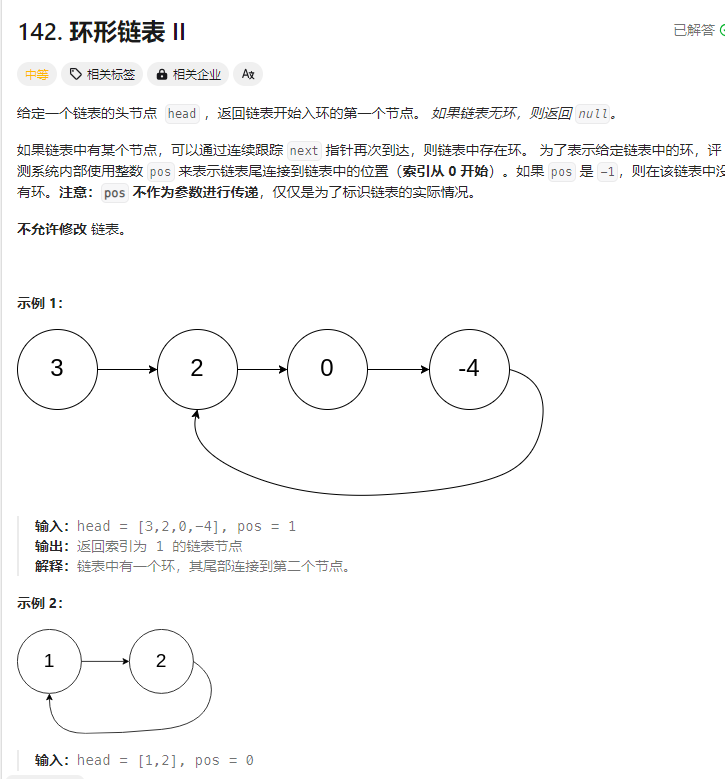
public ListNode detectCycle (ListNode head) new ArrayList<>();while (head != null ){if (nodes.contains(head)){return head;return null ;public ListNode detectCycle (ListNode head) new ListNode(0 ,head);new ListNode(0 ,head);while ((slow != null && fast != null )){null ?null :fast.next.next;if (slow != null && slow == fast){new ListNode(0 ,head);while (preHead != slow){return slow;return null ;
1
2
3
4
5
6
7
8
9
10
11
12
13
14
15
16
17
18
19
20
21
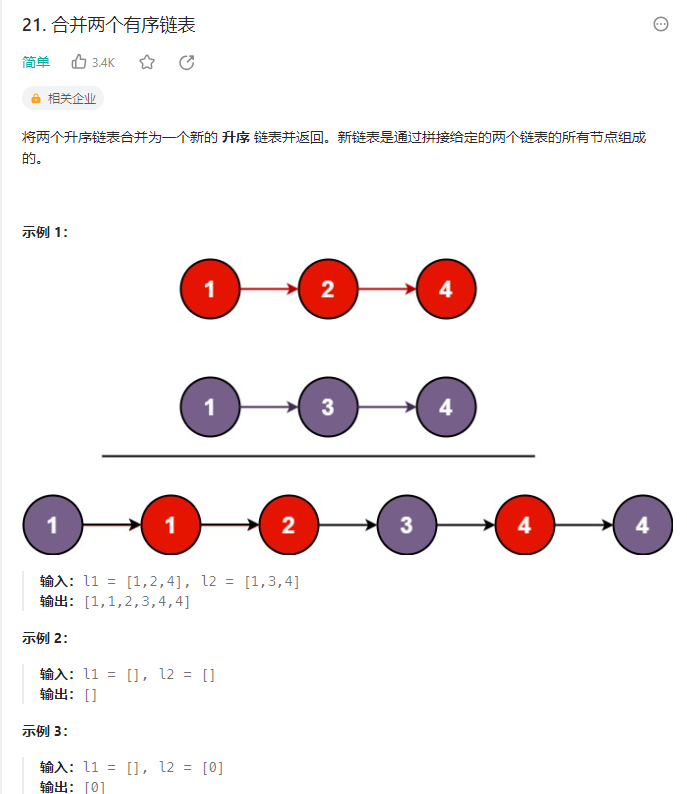
public ListNode mergeTwoLists (ListNode list1, ListNode list2) new ListNode(-1 );while (list1 != null && list2 != null ){if (list1.val <= list2.val){else {if (list1 != null ){if (list2 != null ){return pre.next;
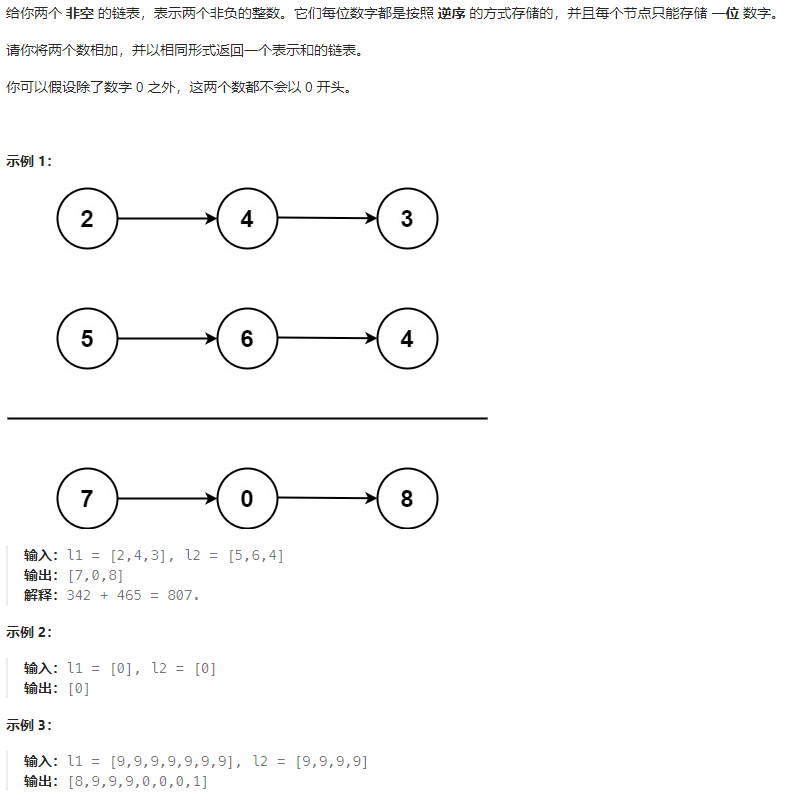
解题思路:关键点——标志位int add = 0表示是否进一位
1
2
3
4
5
6
7
8
9
10
11
12
13
14
15
16
17
18
public static ListNode addTwoNumbers (ListNode l1, ListNode l2) new ListNode(-1 );int add = 0 ;while (list1 !=null || list2 !=null || add == 1 ){int val1 = list1 != null ?list1.val:0 ;int val2 = list2 != null ?list2.val:0 ;int value = (val1 + val2 + add) % 10 ;10 ? 1 :0 ;new ListNode(value);null ?list1.next:null ;null ?list2.next:null ;return pre.next;
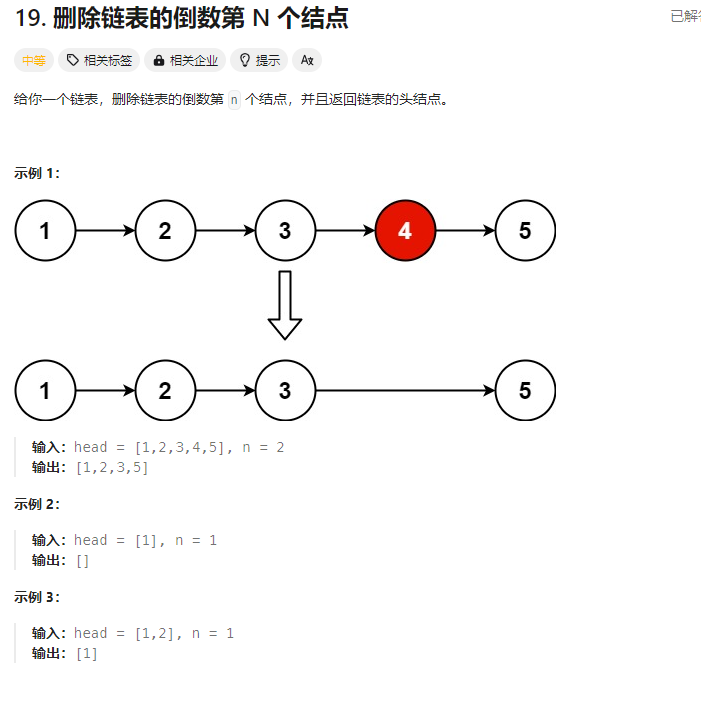
1 2 3 4 5 6 7 8 9 10 11 12 13 14 15 16 17 18 19 20 21 22 23 24 25 26 27 28 29 30 31 32 33 34 35 36 37 38 39 40 41 42 43 44 public ListNode removeNthFromEnd (ListNode head, int n) new ListNode(-1 );while (n-- > 0 ){while (first !=null && first.next != null ){return pre.next;public ListNode removeNthFromEnd2 (ListNode head, int n) new ArrayList<>();new ListNode(0 );while (cur != null ){1 ).next = nodes.get(nodes.size() - n).next;return nodes.get(0 ).next;
1 2 3 4 5 6 7 8 9 10 11 12 13 14 15 16 17 18 19 20 21 22 23 24 25 26 27 28 29 30 31 32 33 34 public ListNode swapPairs (ListNode head) new ListNode(-1 ,head);while (cur.next != null && cur.next.next != null ){return dummyHead.next;public ListNode swapPairs1 (ListNode head) if (head == null || head.next == null ){return head;return newHead;
解题思路:解法与2个一组翻转链表基本一致,区别在于维护步长n,尝试找n个一组,才翻转,并且维护翻转前后的pre和next
1 2 3 4 5 6 7 8 9 10 11 12 13 14 15 16 17 18 19 20 21 22 23 24 25 26 27 28 29 30 31 32 33 34 35 36 37 38 39 40 41 42 43 44 45 46 47 48 49 50 51 52 53 54 55 56 57 58 59 60 61 62 63 64 65 66 67 68 69 70 71 72 73 74 75 76 77 78 79 80 81 public ListNode reverseKGroup (ListNode head, int k) if (k == 1 || head == null ){return head;int n = k;while (n > 1 && newHead.next != null ){if (n != 1 ){return head;else {null ;return newHead;private ListNode reverse (ListNode head) null ;while (curr != null ) {return newHead;public ListNode reverseKGroup1 (ListNode head, int k) if (k == 1 || head == null ){return head;new ListNode(0 );while (end.next != null ){int n = k;while (n > 0 && end.next != null ){if (n==0 ){null ;return dump.next;
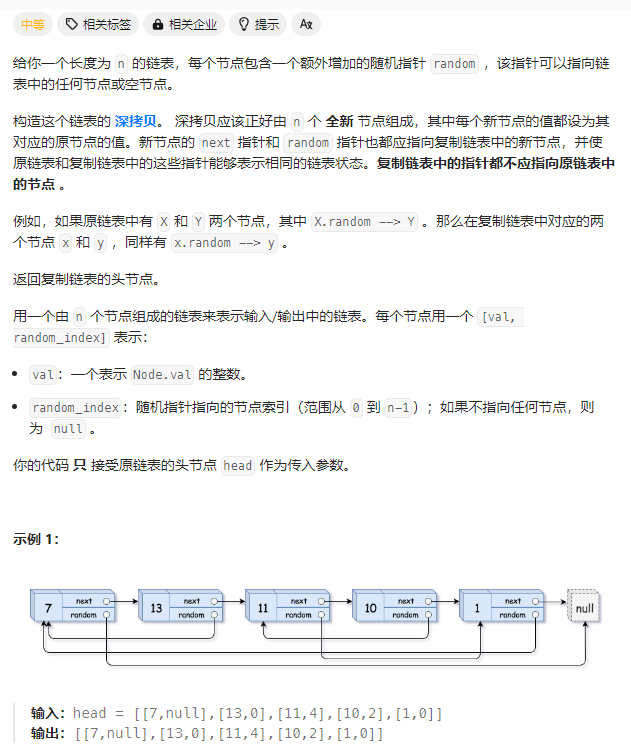
解法一:遍历2次 第一次:根据next组装next链,且维护新旧节点的map,第二次根据map组装random链
1 2 3 4 5 6 7 8 9 10 11 12 13 14 15 16 17 18 19 20 21 22 23 24 25 26 27 28 29 30 31 32 33 public Node copyRandomList1 (Node head) if (head == null ){return null ;new Node(-1 );new Node(-1 );new Node(head.val);new HashMap<>();while (cur != null ){new Node(cur.val);while (newCur != null ){return dummyHead.next;
解法二:递归+维护新旧节点关系map 递归时,组装next、random链表时从map中取,没则新建维护进map
1
2
3
4
5
6
7
8
9
10
11
12
13
14
15
Map<Node,Node> nodeMap = new HashMap<>();public Node copyRandomList2 (Node head) if (head == null ){return null ;if (nodeMap.containsKey(head)){return nodeMap.get(head);else {new Node(head.val);return newNode;
解法三:A->B->C ==> A->A’->B->B’->C->C’ 1、复制copy节点, A->A’->B->B’->C->C’
1 2 3 4 5 6 7 8 9 10 11 12 13 14 15 16 17 18 19 20 21 22 23 24 25 26 27 28 29 30 31 32 33 34 35 36 37 38 39 40 public Node copyRandomList (Node head) if (head == null ){return null ;while (cur != null ){new Node(cur.val);while (cur != null ){if (random != null ){while (cur != null ){if (null != cur.next){return newHead;
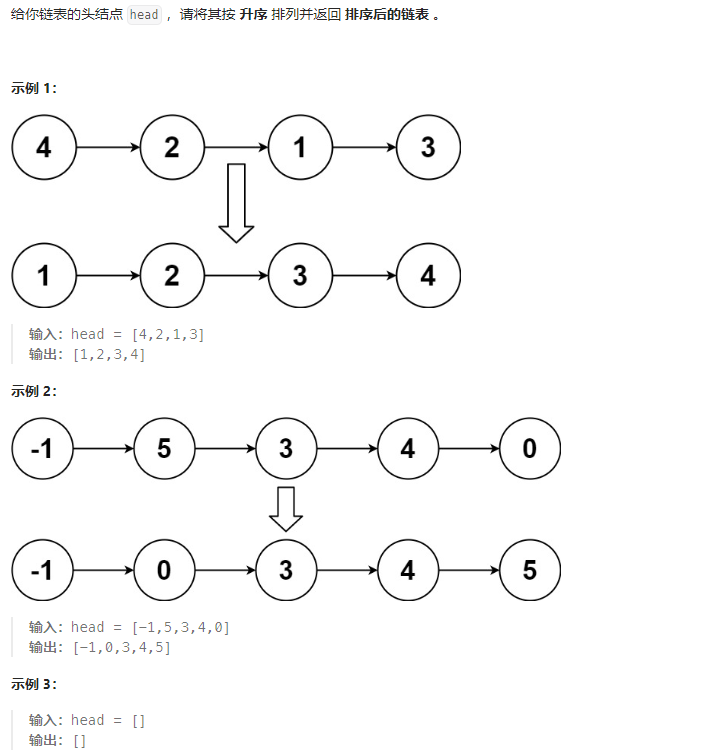
解法一(推荐):自顶向下归并排序 1 2 3 4 5 6 7 8 9 10 11 12 13 14 15 16 17 18 19 20 21 22 23 24 25 26 27 28 29 30 31 32 33 34 35 public ListNode sortList1 (ListNode head) if (head == null || head.next == null ){return head;while (fast.next != null && fast.next.next != null ){null ;return mergeTwoLists(sortList1(head),sortList1(newHead));public ListNode mergeTwoLists (ListNode list1, ListNode list2) if (list1 == null ){return list2;if (list2 == null ){return list1;if (list1.val <= list2.val){return list1;else {return list2;
解法二:自底向上归并排序 1 2 3 4 5 6 7 8 9 10 11 12 13 14 15 16 17 18 19 20 21 22 23 24 25 26 27 28 29 30 31 32 33 34 35 36 37 38 39 40 41 42 43 44 45 46 47 48 49 50 51 52 53 54 public ListNode sortList2 (ListNode head) if (head == null || head.next == null ){return head;int length = 0 ;while (cur != null ){new ListNode(0 ,head);for (int i = 1 ; i < length; i = (i << 1 )) {while (cur != null ){for (int j = 1 ; j < i && cur.next != null ; j++) {null ;for (int j = 1 ; j < i && cur!= null && cur.next != null ; j++) {null ;if (cur != null ){null ;while (pre.next != null ){return dummyHead.next;
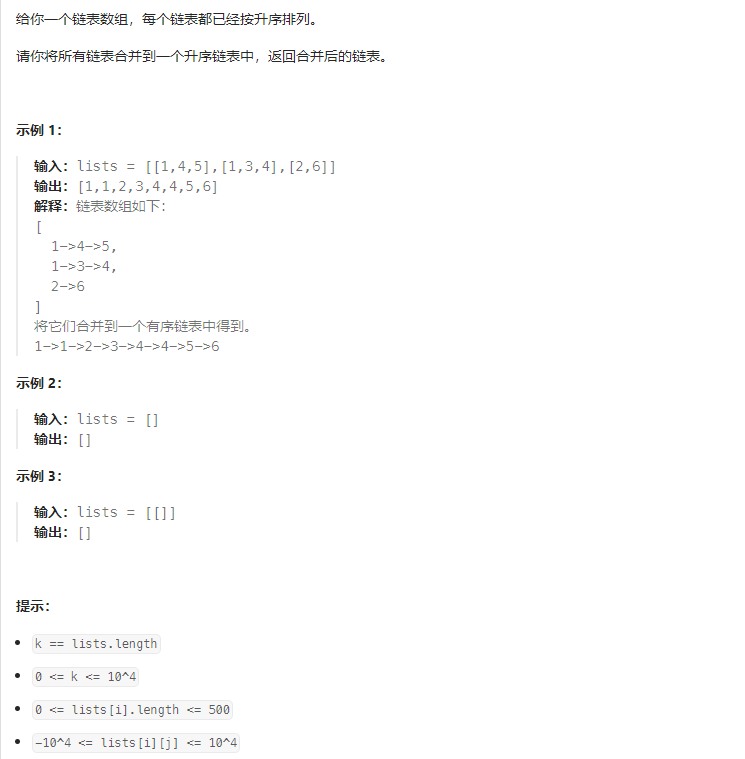
解法解析:类似合并2个有序队列,区别在于方法入参变成ListNode[] lists
1 2 3 4 5 6 7 8 9 10 11 12 13 14 15 16 17 18 19 20 21 22 23 24 25 26 27 28 29 public ListNode mergeKLists (ListNode[] lists) if (null == lists){return null ;null ;int index = -1 ;for (int i = 0 ; i < lists.length; i++) {if (null == lessNode || (null != list && list.val < lessNode.val)){if (lessNode == null ){return null ;return lessNode;
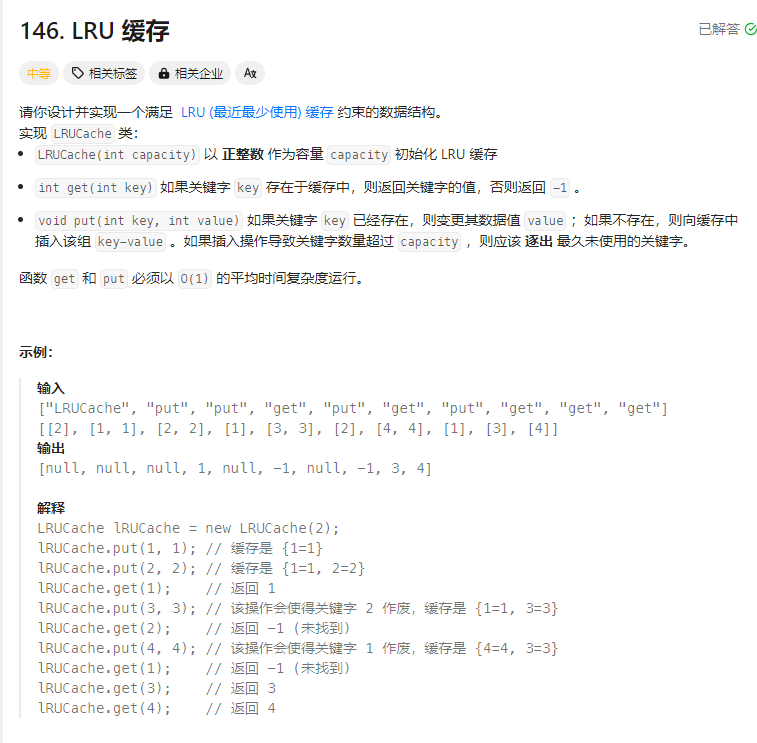
解法一:Queue+Map 比较慢:queue ArrayBlockingQueue对删除操作较慢
1 2 3 4 5 6 7 8 9 10 11 12 13 14 15 16 17 18 19 20 21 22 23 24 25 26 27 28 29 30 31 32 public class LRUCache2 new HashMap<>();private Integer capacity;public LRUCache2 (int capacity) new ArrayBlockingQueue<Integer>(capacity);this .capacity = capacity;public int get (int key) if (map.containsKey(key)){return map.get(key);return -1 ;public void put (int key, int value) if (map.containsKey(key)){else {if (map.size() == capacity){
解法二:自定义双向链表+Map 封装方法doAddToHead、doRemoveNode
1 2 3 4 5 6 7 8 9 10 11 12 13 14 15 16 17 18 19 20 21 22 23 24 25 26 27 28 29 30 31 32 33 34 35 36 37 38 39 40 41 42 43 44 45 46 47 48 49 50 51 52 53 54 55 56 57 58 59 60 61 62 63 64 65 66 67 68 69 70 71 72 73 74 75 76 77 78 public class LRUCache3 public static class ListNode int key;int val;public ListNode (int key,int val) this .key = key;this .val = val;public ListNode () @Override public String toString () return "ListNode{" + ", key=" + key + ", val=" + val + "next=" + next +'}' ;private int capacity;private ListNode head,tail;private Map<Integer,ListNode> dataMap;public LRUCache3 (int capacity) this .capacity = capacity;new ListNode();new ListNode();new HashMap<>();public void put (int key,int value) new ListNode(key,value);if (dataMap.containsKey(key)){else {if (dataMap.size() > capacity){public int get (int key) if (dataMap.containsKey(key)){return node.val;else {return -1 ;private void doAddToHead (ListNode node) if (node == null ){return ;private void doRemoveNode (ListNode node) if (node == null ){return ;
解法三:Java自带实现 1 2 3 4 5 6 7 8 9 10 11 12 13 14 15 16 17 18 19 20 21 22 public class LRUCache1 extends LinkedHashMap <Integer ,Integer >private Integer capacity;public LRUCache1 (int capacity) super (capacity,0.75F ,true );this .capacity = capacity;public int get (int key) return super .getOrDefault(key,-1 );public void put (int key, int value) super .put(key,value);@Override protected boolean removeEldestEntry (Map.Entry<Integer, Integer> eldest) return super .size() > capacity;
图论 回溯 二分查找1 栈 堆 贪心算法 动态规划 多维动态规划