leetcode100-树

二叉树

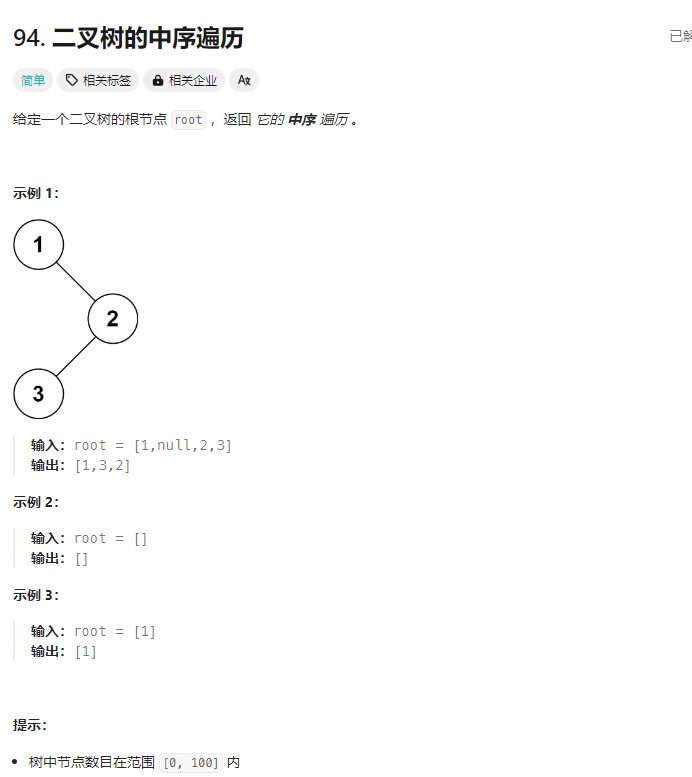
94. 二叉树的中序遍历

image-20240120175425011

二叉树的先序、中序、后序遍历是指遍历一颗二树时遍历到父节点的顺序的先后

1、先序:父左右

2、中序:左父右

3、后序:左右父

1
2
3
4
5
6
7
8
9
10
11
12
13
14
15
public class A1_94{
List<Integer> result = new ArrayList<>();
public List<Integer> inorderTraversal1(TreeNode root) {
inOrderDfs(root);
return result;
}
private void inOrderDfs(TreeNode root) {
if(root == null){
return;
}
inOrderDfs(root.left);
result.add(root.val);
inOrderDfs(root.right);
}
}

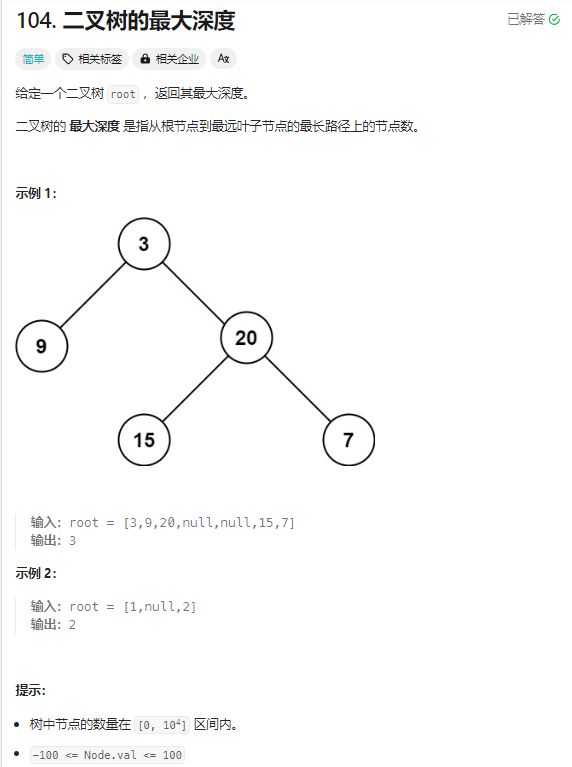
104. 二叉树的最大深度

image-20240120180330854

1
2
3
4
5
6
7
8
9
public class A2_104{
public int maxDepth(TreeNode root) {
if(null == root){
return 0;
}else{
return 1 + Math.max(maxDepth(root.left) ,maxDepth(root.right) );
}
}
}

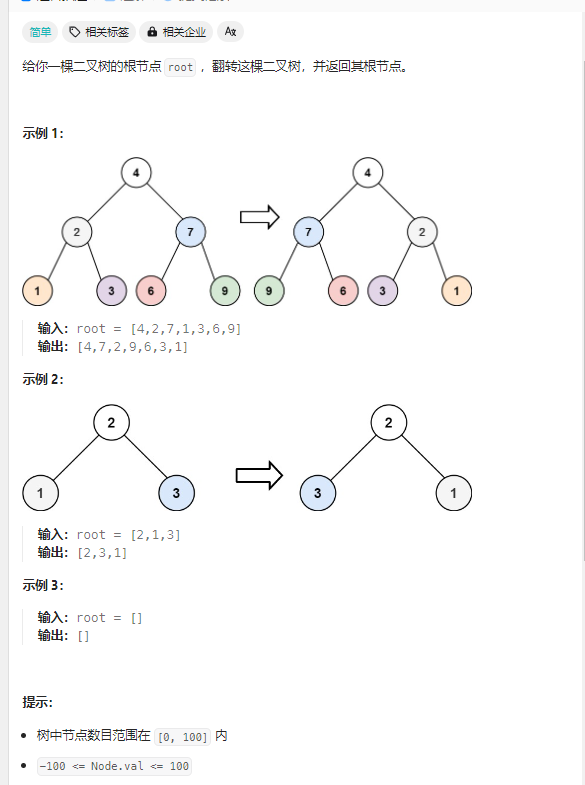
226. 翻转二叉树

image-20240120180820029

1
2
3
4
5
6
7
8
9
10
11
public TreeNode invertTree(TreeNode root) {
if(root == null){
return root;
}
TreeNode left = invertTree(root.left);
TreeNode right = invertTree(root.right);

root.right = left;
root.left = right;
return root;
}

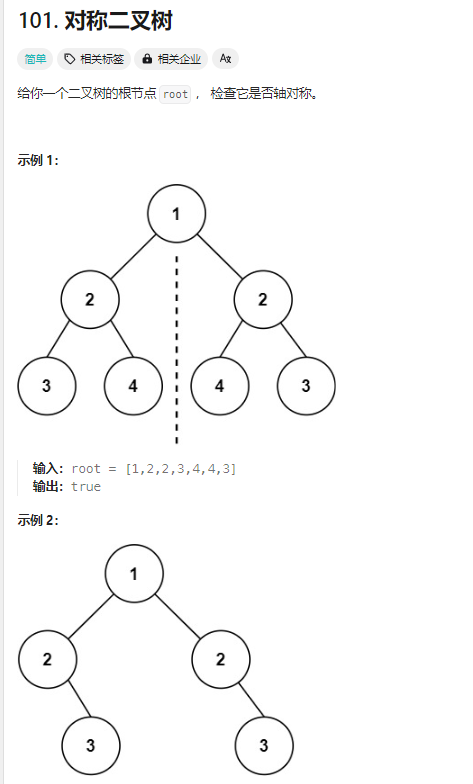
101. 对称二叉树

image-20240120181423723

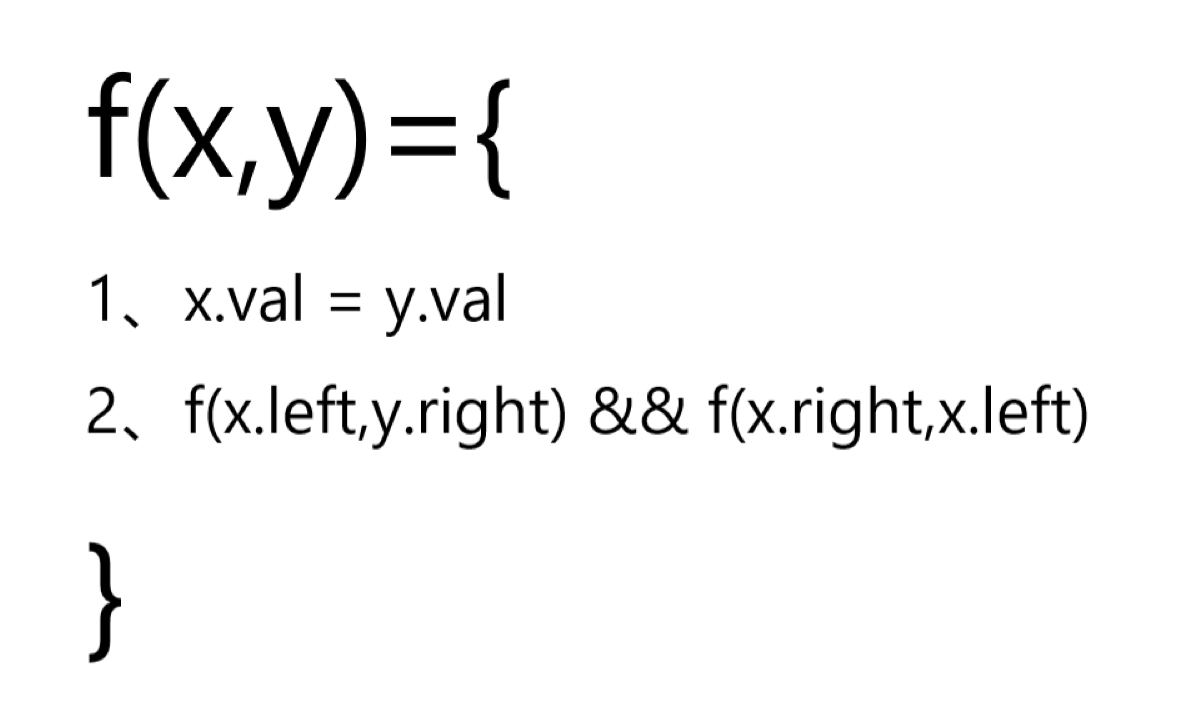
思路:定义出递归函数

1
2
3
4
5
6
7
8
9
10
11
12
13
14
15
16
17
18
19
20
21
22
23
24
25
26
27
28
29
30
31
32
33
34
35
36
37
38
39
40
41
42
43
44
45
46
47
48
49
50
51
52
53
54
55
56
public class A4_101{
/**
* 递归
* @param root
*/
public boolean isSymmetric(TreeNode root) {
if(null == root){
return true;
}
return checkSymmetric(root.left,root.right);
}

public boolean checkSymmetric(TreeNode left,TreeNode right){
if(null == left && null == right){
return true;
}
if(null == left || null == right){
return false;
}
return left.val == right.val && checkSymmetric(left.left,right.right) && checkSymmetric(left.right,right.left);
}

/**
* 迭代写法
* @param root
*/
public boolean isSymmetric1(TreeNode root) {
if(null == root){
return true;
}
//这里不能用ArrayDeque,因为ArrayDeque无法存储null
Queue<TreeNode> queue = new LinkedList<>();
queue.add(root);
queue.add(root);
while(queue.size() > 0){
TreeNode left = queue.poll();
TreeNode right = queue.poll();
if(left == null && right == null){
continue;
}
if((left == null || right == null) || left.val != right.val){
return false;
}

queue.add(left.left);
queue.add(right.right);
if(left == right){
//queue.add(root);做了2次,避免重复比较
continue;
}
queue.add(left.right);
queue.add(right.left);
}
return true;
}
}

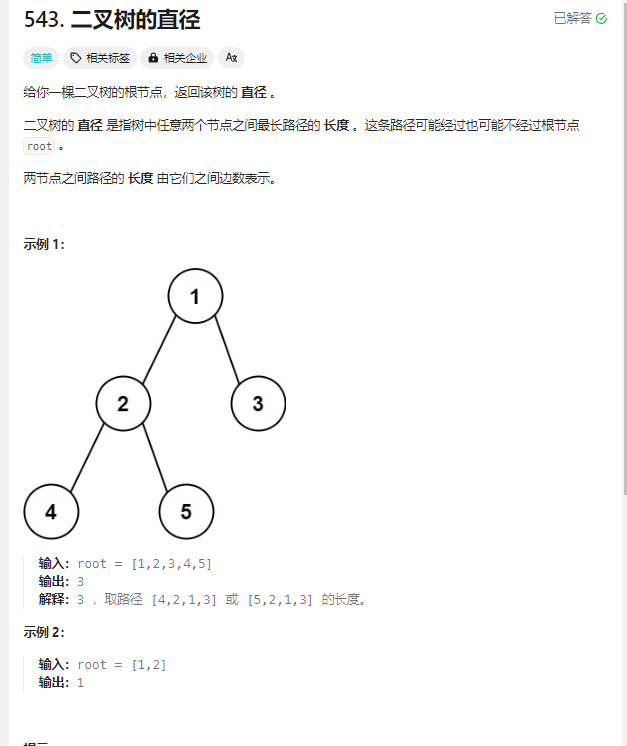
543. 二叉树的直径

image-20240121154853850

1
2
3
4
5
6
7
8
9
10
11
12
13
14
15
16
17
18
19
20
21
22
23
24
25
26
27
private Integer max = 0;
public int diameterOfBinaryTree(TreeNode root) {
maxDepth(root);
return max;
}

/**
* 首先我们知道一条路径的长度为该路径经过的节点数减一,
* 所以求直径(即求路径长度的最大值)等效于求路径经过节点数的最大值减一。
* root直径 = root.lDept + root.rDept + 1 - 1 = root.lDept + root.rDept
* root深度 = 1 + Math.max(lDept, rDept)
* f(x):查找root的最大深度的过程中(查找以root为根的最大深度)
* 1、左子树的f(x.left) + f(x.righy) = x节点的直径
* 2、深度遍历过程中,计算最大的 MAX{f(x.left) + f(x.righy)}
* @param root
* @return
*/
public int maxDepth(TreeNode root) {
if(null == root){
return 0;
}else{
int lDept = maxDepth(root.left);
int rDept = maxDepth(root.right);
max = Math.max(max,lDept + rDept);
return 1 + Math.max(lDept, rDept);
}
}

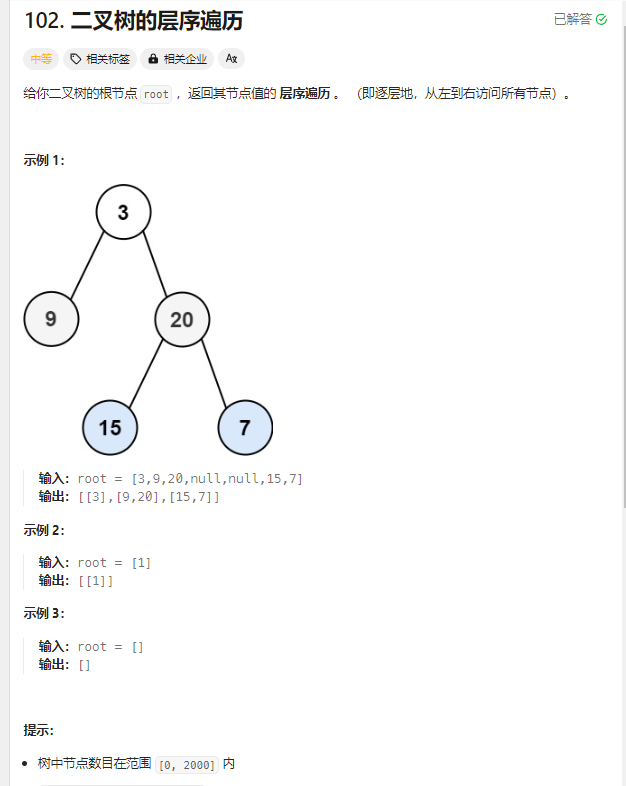
102. 二叉树的层序遍历

image-20240121155143461

1
2
3
4
5
6
7
8
9
10
11
12
13
14
15
16
17
18
19
20
21
22
23
24
25
26
27
28
29
30
31
32
33
34
35
36
37
38
39
40
41
42
43
44
45
46
47
48
49
50
51
52
53
public class A6_102{
List<List<Integer>> result = new ArrayList<>();
/**
* 利用深度遍历,且传入层数
* @param root
* @return
*/
public List<List<Integer>> levelOrder1(TreeNode root) {
dfs(root,0);
return result;
}
public void dfs(TreeNode node,int level){
if(node == null){
return;
}
if(result.size() == level){
result.add(new ArrayList<>());
}
result.get(level).add(node.val);
dfs(node.left,level+1);
dfs(node.right,level+1);
}
/**
* 利用队列实现宽度遍历
* @param root
* @return
*/
public List<List<Integer>> levelOrder(TreeNode root) {
List<List<Integer>> result = new ArrayList<>();
if(root == null){
return result;
}
Queue<TreeNode> queue = new ArrayDeque<>();
queue.add(root);
while (!queue.isEmpty()){
int n = queue.size();
List<Integer> data = new ArrayList<>();
while(n > 0){
TreeNode node = queue.poll();
data.add(node.val);
if(null != node.left){
queue.add(node.left);
}
if(null != node.right){
queue.add(node.right);
}
n--;
}
result.add(data);
}
return result;
}
}

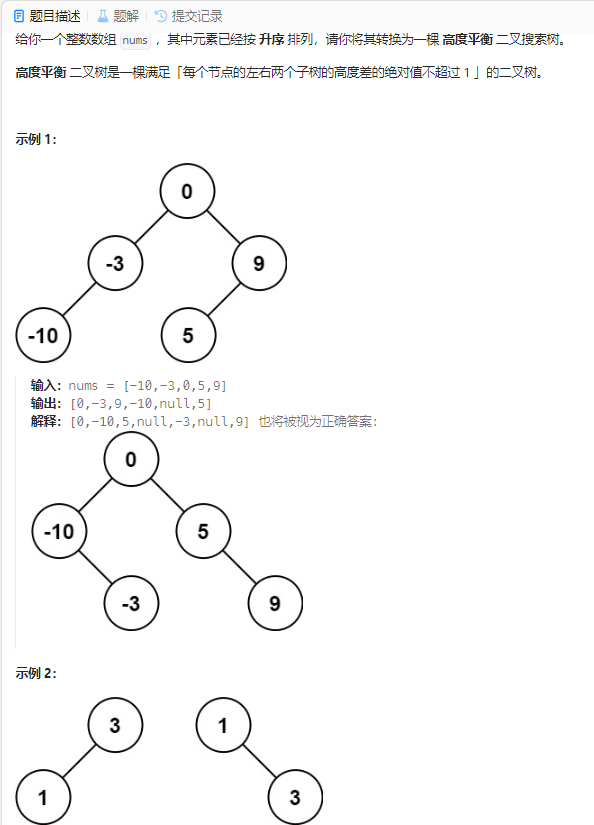
108. 将有序数组转换为二叉搜索树

image-20240121161141492

1
2
3
4
5
6
7
8
9
10
11
12
13
14
15
16
17
18
19
20
21
22
23
24
25
26
27
28
public TreeNode sortedArrayToBST(int[] nums) {
return sortedArrayToBST(nums,0,nums.length-1);
}
/**
* 有序数组 = 二叉搜索树的中序遍历
* 1、以nums的中点为根节点root,左右两边分别比root小和大,两边再递归这个过程得到leftResult,rightResult,
* 2、root.left = leftResult,root.right = rightResult
*
* @param nums
* @param begin
* @param end
* @return
*/
public TreeNode sortedArrayToBST(int[] nums,int begin,int end) {
if (null == nums || nums.length == 0 || end - begin < 0){
return null;
}
int mid = (begin + end) / 2;
TreeNode root = new TreeNode(nums[mid]);
//可以不做判断
if(mid != begin){
root.left = sortedArrayToBST(nums,begin,mid-1);
}
if(mid != end){
root.right = sortedArrayToBST(nums,mid+1,end);
}
return root;
}

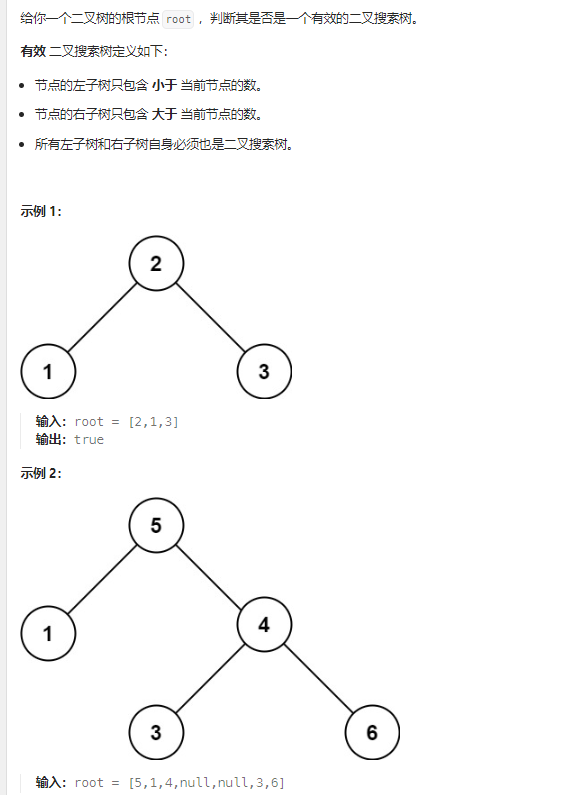
98. 验证二叉搜索树

image-20240121165201253

解法一:中序+前值preVal

1
2
3
4
5
6
7
8
9
10
11
12
13
14
15
16
private long pre = Long.MIN_VALUE;
/**
* 也是利用中序遍历的原理,pre表示已经遍历的中序遍历的数组的最右值,参考方法二
* @param node
* @return
*/
public boolean isValidBST1(TreeNode node) {
if(node == null){
return true;
}
if(!isValidBST1(node.left) || pre >= node.val){
return false;
}
pre = node.val;
return isValidBST1(node.right);

解法二:中序+记录路径List

1
2
3
4
5
6
7
8
9
10
11
12
13
14
15
16
17
18
19
20
21
22
23
24
25
26
public boolean isValidBST2(TreeNode root) {
if(root == null){
return true;
}
List<Integer> inorderList = new ArrayList<>();
inOrderRead(root,inorderList);
for (int i = 0; i < inorderList.size() - 1; i++) {
if(inorderList.get(i) >= inorderList.get(i+1)){
return false;
}
}
return true;
}

private void inOrderRead(TreeNode root,List<Integer> list) {
if(root == null){
return;
}
if(root.left != null){
inOrderRead(root.left,list);
}
list.add(root.val);
if(root.right != null){
inOrderRead(root.right,list);
}
}

解法三:先序遍历思维 + 左右边界判断

1
2
3
4
5
6
7
8
9
10
11
12
13
14
15
16
17
18
19
/**
* 递归(先序遍历)
* @param root
* @return
*/
public boolean isValidBST(TreeNode root) {
return isValidBST(root,Long.MIN_VALUE,Long.MAX_VALUE);
}

public boolean isValidBST(TreeNode node,long lower,long upper) {
if(node == null){
return true;
}
if(node.val <= lower || node.val >= upper){
return false;
}
return isValidBST(node.left,lower,node.val)
&& isValidBST(node.right,node.val,upper);
}

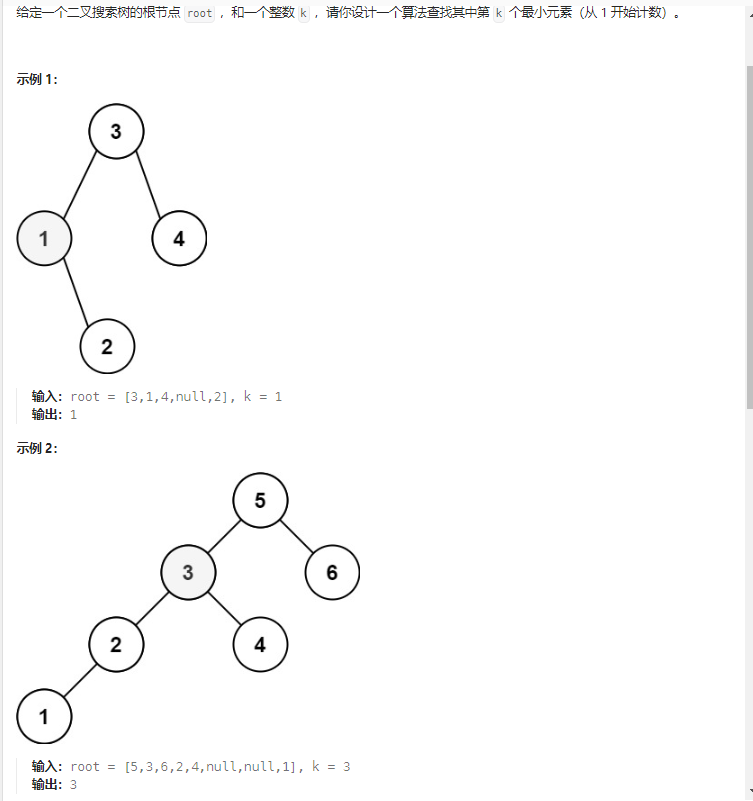
230. 二叉搜索树中第K小的元素

image-20240121164533955

解法一:中序遍历 + count–

1
2
3
4
5
6
7
8
9
10
11
12
13
14
15
16
17
18
19
20
21
22
23
24
25
26
private int result = 0;
private int count = 0;

/**
* 利用中序遍历
* @param root
* @param k
* @return
*/
public int kthSmallest1(TreeNode root, int k) {
count = k;
dfs(root);
return result;
}

public void dfs(TreeNode node){
if(node == null){
return;
}
dfs(node.left);
count--;
if(count == 0){
result = node.val;
}
dfs(node.right);
}

解法二:中序遍历 + List维护所有访问路径,result = list.get(k-1)

解法三:小顶堆 + 遍历第k个

1
2
3
4
5
6
7
8
9
10
11
12
13
14
15
16
17
18
19
20
21
22
23
24
25
26
27
28
PriorityBlockingQueue<Integer> queue;
/**
* 小顶推 + 任意一种遍历
* @param root
* @param k
* @return
*/
public int kthSmallest2(TreeNode root, int k) {
queue = new PriorityBlockingQueue(k);
inOrder(root);
while(!queue.isEmpty()){
k--;
Integer poll = queue.poll();
if(k == 0){
return poll;
}
}
return 0;
}

private void inOrder(TreeNode root) {
if(root == null){
return;
}
queue.offer(root.val);
inOrder(root.left);
inOrder(root.right);
}

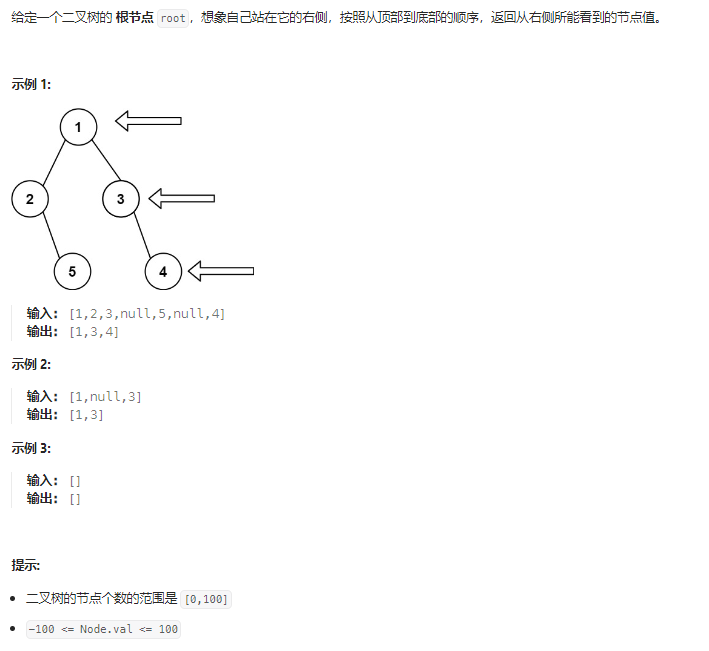
199. 二叉树的右视图

image-20240121175307847

方法一:List+记录层级+父右左遍历

方法二:栈+宽度优先

1
2
3
4
5
6
7
8
9
10
11
12
13
14
15
16
17
18
19
20
21
22
23
24
25
26
27
28
29
30
31
32
33
34
35
36
37
38
39
40
41
42
43
44
45
46
47
48
49
50
51
public class A10_199 {
List<Integer> result = new ArrayList<>();
public List<Integer> rightSideView1(TreeNode root) {
dfs(root,0);
return result;
}

public void dfs(TreeNode root,int level){
if(root == null){
return;
}
if(result.size() == level){
result.add(root.val);
}
level = level + 1;
dfs(root.right,level);
dfs(root.left,level);
}


/**
* 宽度优先便利
* @param root
* @return
*/
public List<Integer> rightSideView(TreeNode root) {
List<Integer> result = new ArrayList<>();
if(root == null){
return result;
}
Queue<TreeNode> queue = new ArrayDeque();
queue.add(root);
while (!queue.isEmpty()){
int size = queue.size();
while (size > 0){
TreeNode node = queue.poll();
if(node.left != null){
queue.add(node.left);
}
if(node.right != null){
queue.add(node.right);
}
size--;
if(size == 0){
result.add(node.val);
}
}
}
return result;
}
}

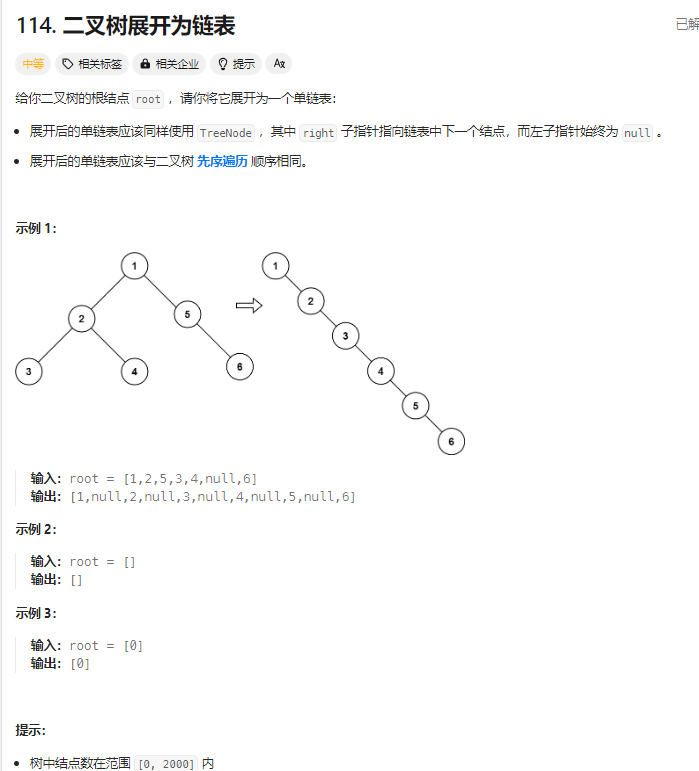
114. 二叉树展开为链表

image-20240121215727024

方法一:深度遍历+自定义递归,在原空间上边展开、边遍历。

方法二:先序遍历+List记录

1
2
3
4
5
6
7
8
9
10
11
12
13
14
15
16
17
18
19
20
21
22
23
24
25
26
27
28
29
30
31
32
33
34
/**
* 利用自生定义递归
* 1、将左子树插入到右子树的地方
* 2、将原来的右子树接到左子树的最右边节点
* 考虑新的右子树的根节点,一直重复上边的过程,直到新的右子树为 null
* f(x) = {
* left = x.left;
* right = x.right;
* x.left = null;
* x.right = f(left);
* x = x.right 递归到底;
* x.right = f(right)
*
* }
* @param root
*/
public void flatten(TreeNode root) {
if(root == null){
return;
}
TreeNode left = root.left;
TreeNode right = root.right;

flatten(left);
//1、将左子树插入到右子树的地方
root.right = left;
root.left = null;
//2、将原来的右子树接到左子树的最右边节点
while(root.right != null){
root = root.right;
}
flatten(right);
root.right = right;
}
1
2
3
4
5
6
7
8
9
10
11
12
13
14
15
16
17
18
19
20
21
22
23
24
25
/**
* 借助List<TreeNode>记录先序便利节点
* @param root
*/
public void flatten1(TreeNode root) {
dfs(root);
TreeNode dummyHead = new TreeNode();
TreeNode cur = dummyHead;
for (int i = 0; i < nodes.size(); i++) {
TreeNode treeNode = nodes.get(i);
cur.left = null;
cur.right = treeNode;
cur = cur.right;
}
}

public void dfs(TreeNode root){
if(root == null){
return;
}
nodes.add(root);
dfs(root.left);
dfs(root.right);

}

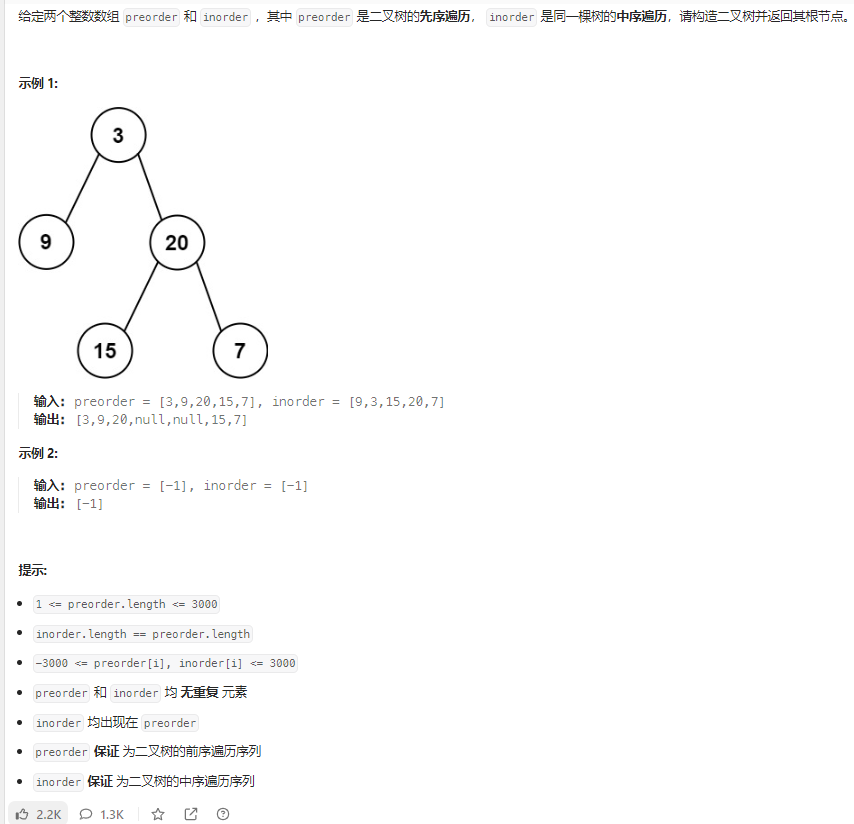
105. 从前序与中序遍历序列构造二叉树

image-20240121222906387

1
2
3
4
5
6
7
8
9
10
11
12
13
14
15
16
17
18
19
20
21
22
23
24
25
26
27
public TreeNode buildTree(int[] preorder, int[] inorder) {
int preLength = preorder.length;
Map<Integer,Integer> inMap = new HashMap<>();
for (int i = 0; i < inorder.length; i++) {
int i1 = inorder[i];
inMap.put(i1,i);
}
return buildTree(preorder,0,preLength-1,0,inorder.length-1,inMap);
}

/**
* 1XXYYYY pre 根节点|左子树|右子树
* XX1YYYY in 左子树|根节点|右子树
*/
private TreeNode buildTree(int[] preorder,int preLeft, int preRight,int inLeft, int inRight, Map<Integer, Integer> inMap) {
if((preLeft > preRight) || (inLeft > inRight)){
return null;
}
//先序的第一个数是父节点
int root = preorder[preLeft];
TreeNode rootNode = new TreeNode(root);
Integer inRootIndex = inMap.get(root);
//inRootIndex-inLeft:左子树长度
rootNode.left = buildTree(preorder,preLeft+1,inRootIndex-inLeft+preLeft,inLeft,inRootIndex-1,inMap);
rootNode.right = buildTree(preorder,inRootIndex-inLeft+preLeft+1,preRight,inRootIndex+1,inRight,inMap);
return rootNode;
}

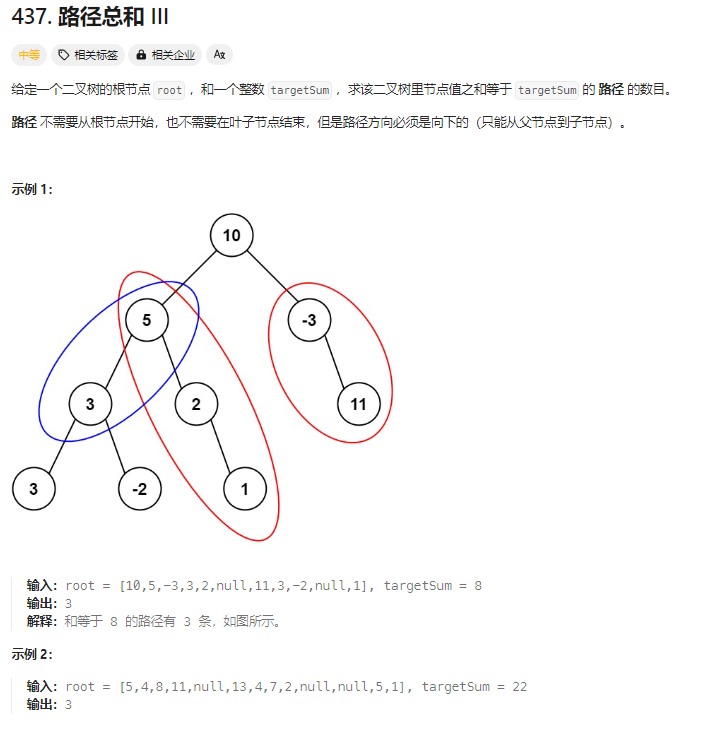
437. 路径总和 III

image-20240801154343785

解法一:递归 + 前缀和 + 回溯

1
2
3
4
5
6
7
8
9
10
11
12
13
14
15
16
17
18
19
20
21
22
23
24
25
26
27
28
29
30
31
32
33
34
35
36
private Integer result = 0;
/**
* 递归 + 前缀和 + 回溯
* path(x,y) = path(x)- path(y):从根节点到x的path - 从根节点到y的path = path(x,y)
* 假设 path(x,y) = target,则满足条件
* 利用前缀和prefix<Integer path,Integer count> 来记录深度遍历过程中,从根节点到某个节点的和为path的个数
* @param root
* @param targetSum
* @return
*/
public int pathSum(TreeNode root, int targetSum) {
if(root == null){
return 0;
}
Map<Long,Integer> prefixMap = new HashMap<>();
//存在从root到node节点的sum = target的场景
prefixMap.put(0L,1);
dfs(root,targetSum,0L,prefixMap);
return result;
}

private void dfs(TreeNode root,int targetSum,long curSum,Map<Long,Integer> prefix){
if(root == null){
return;
}
int val = root.val;
curSum += val;
result += prefix.getOrDefault(curSum-targetSum,0);
//保存当前节点的前缀和结果
prefix.put(curSum,prefix.getOrDefault(curSum,0) + 1);
//向下递归
dfs(root.left,targetSum,curSum,prefix);
dfs(root.right,targetSum,curSum,prefix);
//回溯
prefix.put(curSum,prefix.getOrDefault(curSum,0) - 1);
}

解法二:复杂灵活递归

1
2
3
4
5
6
7
8
9
10
11
12
13
14
15
16
17
18
19
20
21
22
23
24
25
26
27
28
29
30
31
/**
* 深度便利+递归
* pathSum(root,target):root下存在路径值为target的路径个数,不要求从root开始
* @param root
* @param targetSum
* @return
*/
public int pathSum1(TreeNode root, int targetSum) {
if(root == null){
return 0;
}
return pathFirtstSum(root, (long) targetSum) + pathSum1(root.left,targetSum) + pathSum1(root.right,targetSum);
}

/**
* pathFirtstSum(root,target):以root为路径第一个节点到某个节点的路劲值为target的个数
* @param rooTreeNode
* @param target
* @return
*/
public int pathFirtstSum(TreeNode rooTreeNode, Long target){
int result = 0;
if(rooTreeNode == null){
return 0;
}
int val = rooTreeNode.val;
if(val == target){
result++;
}
return result + pathFirtstSum(rooTreeNode.left,target-val) + pathFirtstSum(rooTreeNode.right,target-val);
}

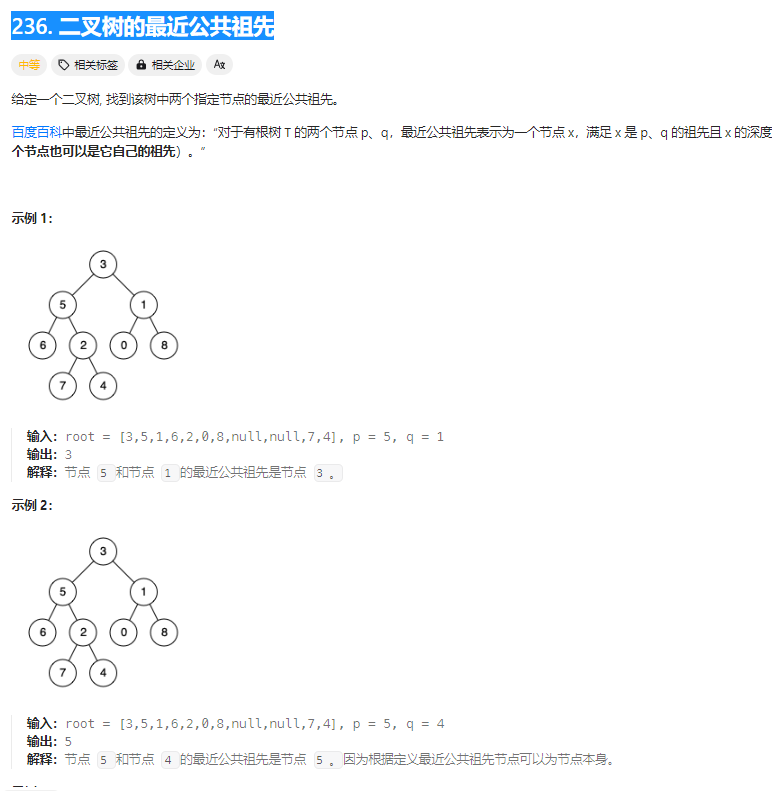
236. 二叉树的最近公共祖先

image-20240122224457197

解法一:利用递归+List找出p、q的路径,比对路径

1
2
3
4
5
6
7
8
9
10
11
12
13
14
15
16
17
18
19
20
21
22
23
24
25
26
27
28
29
30
31
32
33
34
35
36
37
38
39
40
41
42
43
44
45
/**
* 深度遍历+找出p,q2条节点路径,比对路径
* @param root
* @param p
* @param q
* @return
*/
public TreeNode lowestCommonAncestor2(TreeNode root, TreeNode p, TreeNode q) {
List<TreeNode> pList = new ArrayList<>();
List<TreeNode> qList = new ArrayList<>();
dfs2(root,p,pList);
dfs2(root,q,qList);
for (int i = 0; i < pList.size() ; i++) {
if(qList.contains(pList.get(i))){
return pList.get(i);
}
}

return ans;
}

/**
* 能从root往下找到p和q
* @param root
* @param target
* @return
*/
private boolean dfs2(TreeNode root,TreeNode target,List<TreeNode> list){
if(root == null){
return false;
}
if(root == target){
list.add(root);
return true;
}
if(dfs2(root.left,target,list)){
list.add(root);
return true;
}
if(dfs2(root.right,target,list)){
list.add(root);
return true;
}
return false;
}

解法二:利用特性+复杂递归

1
2
3
4
5
6
7
8
9
10
11
12
13
14
15
16
17
18
19
20
21
22
23
24
25
26
27
28
private TreeNode ans;
/**
* 递归深度遍历
* @param root
* @param p
* @param q
* @return
*/
public TreeNode lowestCommonAncestor1(TreeNode root, TreeNode p, TreeNode q) {
dfs1(root,p,q);
return ans;
}

public boolean dfs1(TreeNode root,TreeNode p,TreeNode q){
if(root == null){
return false;
}
boolean left = dfs1(root.left, p, q);
boolean right = dfs1(root.right, p, q);
boolean rootIsOneOfTarget = root.val == p.val || root.val == q.val;
if((left && right) || ((left || right) && rootIsOneOfTarget)){
//1、root的左右子树分别包含p或q
//2、root的左右子树包含p或q 且 root = p或q
ans = root;
}
//向上传
return left || right || rootIsOneOfTarget;
}

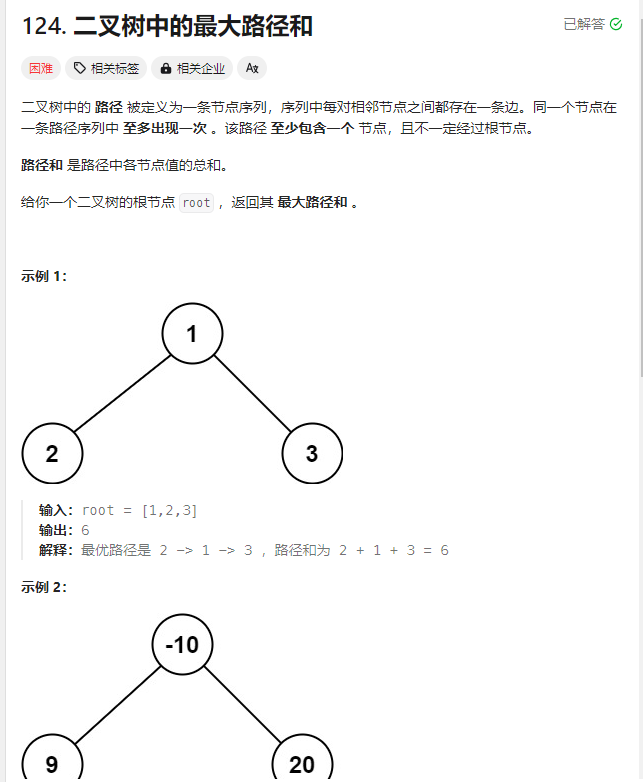
124. 二叉树中的最大路径和

image-20240122232612668

解法一:递归+以root为起始节点的最大路径特性

1
2
3
4
5
6
7
8
9
10
11
12
13
14
15
16
17
18
19
20
21
22
23
24
25
26
27
28
private Integer max = Integer.MIN_VALUE;
public int maxPathSum(TreeNode root) {
dfsMaxPath(root);
return max;
}

/**
* f(x)以root节点为开始节点的一条路径的最大值
* 1、root.val 本身
* 2、root.val + f(root.left)
* 3、root.val + f(root.right)
* 4、取最大值
* 在递归f(x)的过程中,计算
* 经过root的最大路路径=Max(val+ f(root.left),val+f(root.right),val+ f(root.left)+ f(root.right))
* @param root
* @return
*/
public int dfsMaxPath(TreeNode root) {
if(null == root){
return 0;
}

int lDept = Math.max(dfsMaxPath(root.left),0);
int rDept = Math.max(dfsMaxPath(root.right),0);
int val = root.val;
this.max = Math.max(val + lDept + rDept,this.max);
return Math.max(lDept,rDept) + val;
}